
Potting & Soil Mixes
Well-Draining Potting Soil: How to Choose or Make One
The short answer
Well-draining potting soil is a mix that lets water pass through quickly instead of pooling around roots, achieved by blending a base potting soil with a mineral material like perlite, pumice, or coarse sand.
Last updated September 2026
| Core addition | Perlite, pumice, or coarse sand mixed into a base potting soil to create air pockets |
|---|---|
| Drainage test | Water should exit the pot's drainage hole within seconds to a couple minutes of watering |
| Pot matters too | A pot without a drainage hole undermines even a well-draining mix by trapping water at the bottom |
| Who needs it most | Succulents, cacti, and any plant prone to root rot from consistently wet soil |
Scroll for more →
What's covered13
- Why drainage matters this much
- What makes a mix well-draining
- Checking if your current soil drains well
- The pot matters as much as the soil
- Building your own well-draining mix
- Matching drainage level to the plant
- Signs your soil is draining too fast, not too slowly
- Testing drainage before you plant
- Fixing soil that drains poorly
- Pot material and its effect on drainage
- Amending soil at repotting time versus building from scratch
- What to avoid
- Bottom line
Well-draining potting soil lets extra water leave fast. It still holds enough water for the plant. This guide shows how to test and improve it.
- Well draining potting soil is a mix that lets water pass through quickly after watering instead of pooling and sitting around plant roots. It's usually a base potting soil blended with a mineral material - perlite, pumice, or coarse sand - that creates air pockets and keeps the mix from compacting into a water-holding block.
Why drainage matters this much
Roots need oxygen as much as they need water. Soil that stays saturated for long periods squeezes out the air pockets roots depend on, which starves roots of oxygen and creates conditions for rot-causing fungi to take hold. This is the most common cause of houseplant root rot, and it's usually a soil and watering problem rather than a disease problem that started on its own.
Well-draining soil solves this at the source: water moves through quickly, air moves back into the pockets it left behind, and roots get periods of both moisture and oxygen instead of staying waterlogged.
What makes a mix well-draining
The core addition is a mineral or coarse material that doesn't hold water the way peat, coir, or compost do:
Perlite - lightweight, heat-expanded volcanic glass; the most common and affordable option.
Pumice - a denser, naturally porous volcanic rock that holds up longer without floating or breaking down.
Coarse sand - heavy and effective for drainage, though it adds weight to the mix.
Mixed into a base potting soil at roughly one part mineral material to two or three parts soil, any of these creates the air pockets that keep the mix from compacting and staying wet.
Checking if your current soil drains well
Water the plant and watch the pot:
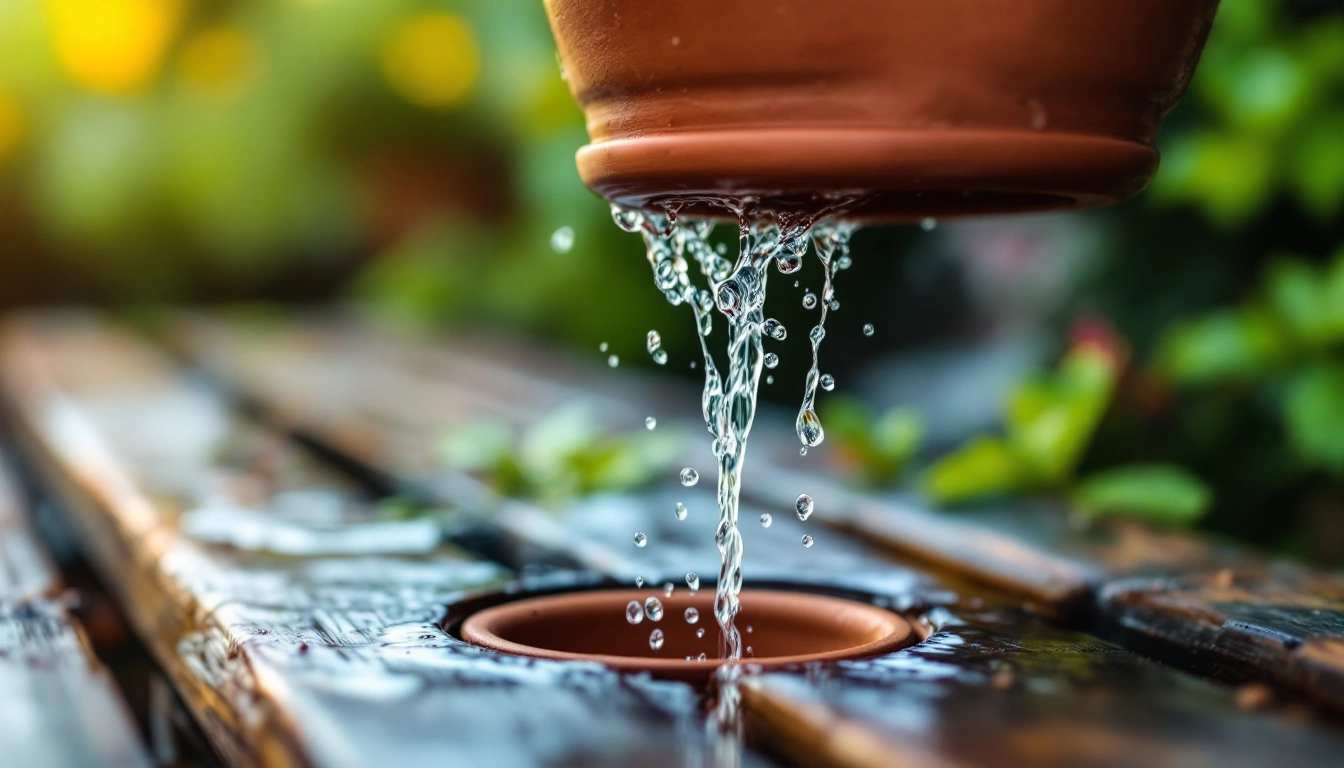
- Water should exit the pot's drainage hole within seconds to a couple of minutes, not sit on the surface or take a long time to disappear.
- The surface of the soil should dry out within a reasonable window for the plant - a few days for most succulents, longer for moisture-loving plants.
- The soil shouldn't compact into a dense, muddy layer after a few months of watering. If it has, the organic portion has broken down and the mix needs refreshing.
The pot matters as much as the soil
A well-draining soil mix still won't help much in a pot with no drainage hole, since water has nowhere to go once it passes through the soil - it just collects at the bottom and keeps roots wet from below. If you're using a decorative pot without drainage, using it as a cachepot around a properly draining nursery pot with holes is a common workaround.
A bagged well-draining potting mix paired with a pot that has drainage holes covers both halves of this equation.
Building your own well-draining mix
- Mixing your own is straightforward and often cheaper than buying specialty bags if you're repotting several plants:
- Start with a base of regular potting soil.
- Add perlite, pumice, or coarse sand at roughly a one-to-two or one-to-three ratio (mineral to soil).
- Adjust looser (more mineral material) for succulents, cacti, or any plant especially prone to rot.
- Mix thoroughly so the mineral material is distributed evenly rather than settling to one side.
Matching drainage level to the plant
Drainage needs vary by plant:
Succulents and cacti want the fastest-draining mix, with a high proportion of mineral material and very little water retention.
Most common houseplants, like pothos, philodendron, and peace lily, do fine in a standard well-draining mix with a moderate amount of perlite, without needing the extreme drainage cacti require.
Moisture-loving plants, like ferns and some tropical foliage plants, still benefit from good drainage to avoid root rot, but tolerate a mix with more organic content and less mineral material than a succulent mix.
Rather than using one universal "well-draining" recipe for every plant, it helps to think of drainage as a sliding scale and adjust the mineral-to-soil ratio based on what a specific plant tolerates.
Signs your soil is draining too fast, not too slowly
- It's possible to overcorrect and end up with a mix that drains too aggressively for a given plant, especially for houseplants that want more consistent moisture than succulents. Signs of this include soil that dries out within hours of watering, wilting between waterings even on a frequent schedule, and visible mineral material with very little organic matter holding moisture at all. If this happens, working more compost, peat, or coir back into the mix restores some water retention without abandoning drainage altogether.
Testing drainage before you plant
- If you're not sure how a mix will perform, a quick test before committing a plant to it can help. Fill a pot with the mix, water it thoroughly, and time how long it takes for water to stop running out of the drainage hole. A mix that stops draining within a couple of minutes and leaves the pot feeling noticeably lighter within a day or two is generally in good shape for most plants that need well-draining soil.
Fixing soil that drains poorly
- If an existing potting mix has compacted and stopped draining well, the most reliable fix is repotting into fresh, well-draining mix rather than trying to loosen the old mix in place. If repotting isn't possible right away, holding off on watering until the soil is fully dry, and improving surface airflow, can help in the short term.
Pot material and its effect on drainage
- The container plays a role alongside the soil mix. Unglazed terracotta and other porous materials let moisture evaporate through the pot walls in addition to the drainage hole, which speeds up drying compared to plastic or glazed ceramic pots holding the same soil mix. For plants especially prone to rot, pairing a well-draining mix with a porous pot compounds the drainage benefit; for plants that dry out too fast already, a non-porous pot can help balance a fast-draining mix.
Amending soil at repotting time versus building from scratch
- There are two practical ways to end up with well-draining soil: buy a pre-made mix labeled for fast drainage, or start with a basic potting soil and amend it yourself. Amending your own gives more control over the exact ratio and is usually cheaper per pot if you're repotting several plants, since mineral amendments like perlite are inexpensive relative to specialty bagged mixes. Buying a pre-made mix saves time and removes any guesswork, which matters more for a grower with just one or two pots to fill.
What to avoid
- Straight garden soil, which is too dense for containers and compacts quickly.
- Mixes advertised for heavy moisture retention on plants that need to dry out between waterings.
- Pots with no drainage hole for plants prone to root rot, regardless of how good the soil mix is.
Bottom line
- Well-draining potting soil comes down to enough mineral material mixed through a soil base, paired with a pot that actually lets water leave. For a closer comparison of the two most common mineral additives, see pumice vs. perlite.
FAQ
Can any potting soil be made well-draining?
Most can, by mixing in enough perlite, pumice, or coarse sand. Very dense, compacted, or old soil is harder to improve without a full repot into fresh mix, since the underlying structure has already broken down.
Does a pot with drainage holes matter as much as the soil?
Yes, arguably more. Even a well-draining soil mix will stay soggy at the bottom of a pot with no drainage hole, since water has nowhere to escape. Both the soil and the pot need to support drainage for it to actually work.
How much perlite should I add to make soil drain better?
A common approach is roughly one part perlite, pumice, or coarse sand to two or three parts potting soil, adjusted looser for plants that want very fast drainage, like cacti, and less for plants that want more moisture retention.
What plants need well-draining soil the most?
Succulents, cacti, and other plants prone to root rot benefit the most from well-draining soil. Many houseplants do fine in a standard potting mix, though most still appreciate some drainage improvement over a dense, compacted mix.