
Potting & Soil Mixes
What Is Coco Coir? A Straight Explainer
The short answer
Coco coir is a growing medium made from the fibrous husk that surrounds a coconut shell, processed, aged, and washed into a lightweight, peat-like material that's become a common substitute for peat moss in potting mixes.
Last updated September 2026
| Source material | The fibrous husk between a coconut's outer shell and the hard inner shell, a byproduct of the coconut industry |
|---|---|
| Processing | Husks are soaked, separated into fiber and pith, aged to remove excess salts and tannins, dried, and compressed for shipping |
| Common forms | Compressed bricks or discs that expand when soaked in water, plus loose bags of coir-based mix |
| Main appeal vs. peat | Renewable byproduct of an existing industry, versus peat, which is harvested from slow-forming bogs |
Scroll for more →
What's covered17
- Where coco coir comes from
- How coco coir is made
- Compressed coir vs. loose coir
- Coco coir vs. peat moss
- The sustainability angle
- Different grades and forms of coco coir
- Coco coir's water-holding and rewetting behavior
- pH and buffering considerations
- Coco coir in hydroponic and soilless growing systems
- How to use coco coir once it's rehydrated
- The industry and supply chain behind coco coir
- Comparing the economics of coir and peat
- Coir dust and safety handling
- Limitations of coco coir
- How coir compares to other peat alternatives
- Recognizing well-processed coir when buying
- Bottom line
Coco coir has a clear role in a plant pot. This guide explains what coco coir is. It also shows when to use it.
- The short answer to what is coco coir: it's a growing medium made from the fibrous husk that sits between a coconut's outer skin and its hard inner shell. That husk material is processed, aged, and washed into a lightweight, absorbent product that looks and behaves a lot like peat moss, and it's become one of the most common substitutes for peat in bagged potting mixes.
Where coco coir comes from
Coconuts are harvested primarily for their meat, water, and oil, and the husk has traditionally been treated as a byproduct or waste material from that processing. Coir production takes that husk and puts it to use rather than discarding it.
The husk itself contains two main components once it's separated: longer, coarser fibers, and a finer, spongy material called pith or coir dust. The long fibers are the same material used to make rope, mats, brushes, and similar products. The pith is the part most commonly used in gardening and potting mixes, since it holds water well and has a texture similar to peat moss once processed.
How coco coir is made
- Turning a raw coconut husk into a usable growing medium takes several steps:
- Husking. The fibrous husk is removed from harvested coconuts, typically at facilities near where coconuts are grown, mainly in tropical regions like India, Sri Lanka, and parts of Southeast Asia.
- Retting and soaking. Husks are soaked, sometimes for extended periods, to loosen the fibers from the pith and help break down some of the natural compounds in the material.
- Separating fiber from pith. Mechanical processing separates the longer fibers from the finer pith material.
- Aging or buffering. Raw coir pith can contain natural salts and tannins built up during the coconut's growth. Quality producers age or chemically buffer the material to reduce these before it's sold, since high salt content can stress plant roots.
- Drying and compressing. The finished pith is dried and compressed into dense bricks, discs, or blocks for efficient shipping, since coir expands dramatically once rehydrated.
Compressed coir vs. loose coir
- Most coco coir sold to home gardeners comes compressed, since shipping it in its expanded, fluffy state would be far less space-efficient. A compressed brick or disc looks small and dense in the package but expands to many times its size once soaked in water. Some potting mixes also come with coir already blended in loose form alongside other ingredients like perlite or compost, ready to use straight out of the bag.
Coco coir vs. peat moss
Coir and peat moss serve a similar structural role in potting mixes - both hold moisture, add bulk, and create a light, workable base - but they come from very different sources and have some real differences:
Renewability. Coir is a byproduct of an existing coconut industry that would otherwise discard the husk material. Peat forms in bogs over centuries and is harvested by extracting the partially decomposed plant material, a much slower natural process.
pH. Coir tends to be closer to neutral, while peat moss is naturally acidic, which matters for plants sensitive to soil pH.
Water behavior. Coir tends to rewet more easily after drying out completely, while dried-out peat can be slower to reabsorb water evenly.
Salt content. Poorly processed coir can carry more residual salt than peat, which is why aging and buffering during processing matters for quality.
The sustainability angle
Coir's appeal to many growers rests partly on the fact that it repurposes a byproduct of an existing food and fiber industry rather than extracting a slow-forming natural resource. Coconut husks are produced continuously wherever coconuts are grown and harvested for other uses, so coir doesn't require dedicated extraction from a limited natural deposit the way peat does. This has made coir a popular alternative for gardeners and growers looking to reduce reliance on peat-based products, though transportation from tropical coconut-growing regions to other parts of the world is its own resource consideration.
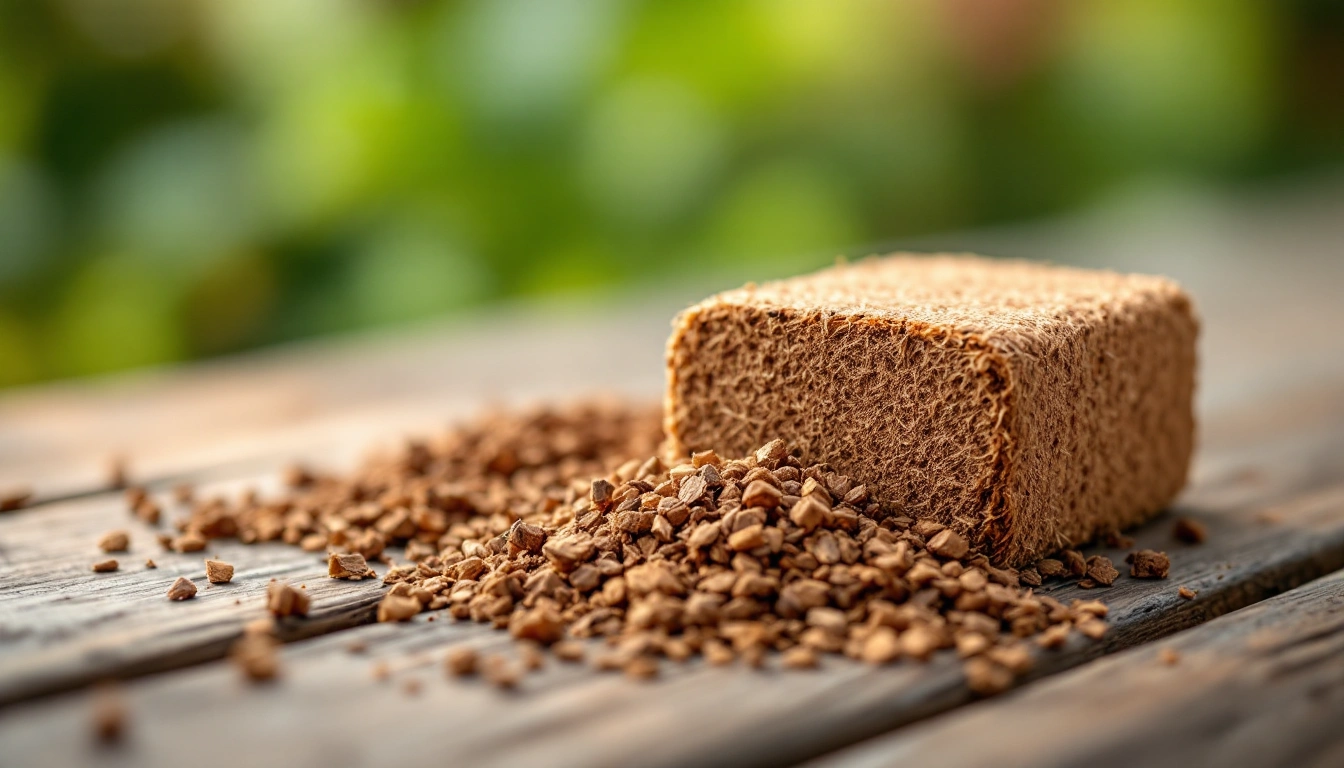
A compressed coco coir brick is a common, space-efficient way to bring the material home and rehydrate it as needed.
Different grades and forms of coco coir
Coco coir isn't sold as a single uniform product. A few variations are common in gardening and horticultural markets:
Coir pith or coco peat - the fine, spongy material that most closely resembles peat moss in texture, typically the base of compressed bricks.
Coir fiber - the longer, coarser strands separated out during processing, sometimes blended back into pith-based products for added structure and to slow decomposition slightly.
Coir chips - chunkier pieces of husk material, closer in size and function to bark, sometimes used in orchid mixes or for plants that want more airflow around roots than fine pith provides.
Products may blend these forms in different ratios depending on the intended use, from fine seedling mixes to chunkier orchid-oriented blends.
Coco coir's water-holding and rewetting behavior
One practical advantage growers often note with coir is how it behaves once it dries out completely. Peat moss that's allowed to fully dry can become hydrophobic, meaning it initially repels water and can be difficult to rewet evenly, sometimes causing water to channel straight through cracks rather than soaking in. Coir tends to rewet more readily after drying, absorbing water more evenly across the material. This makes coir somewhat more forgiving for a grower who occasionally lets a pot dry out further than intended.
Coir also has a high water-holding capacity relative to its weight, similar to peat, which is part of why it's used as a bulk moisture-retentive ingredient in potting mixes rather than as a fast-draining material on its own.
pH and buffering considerations
Coco coir typically sits close to a neutral to slightly acidic pH range, in contrast to peat moss, which is more distinctly acidic. This makes coir a reasonable base for a wider range of plants without needing much pH adjustment, though most potting mixes blend in other ingredients that shift the final pH regardless of which base material is used.
A separate but related issue is cation exchange - coir naturally tends to bind certain nutrients like calcium and magnesium more tightly than it releases them to plant roots, at least initially. Reputable producers address this during processing by treating the coir with a calcium-based solution beforehand, often described as "buffered" coir, which reduces this effect. Buffered, well-processed coir behaves much more predictably for plant growth than unbuffered, poorly processed material.
Coco coir in hydroponic and soilless growing systems
- Beyond traditional potting mixes, coir is widely used as a growing medium in hydroponic and other soilless growing systems, either on its own or blended with materials like perlite for extra drainage. Its consistent structure, low natural nutrient content, and predictable water-holding behavior make it easier to manage precisely in a system where a grower is controlling nutrients directly through fertigation, compared to materials with more variable natural nutrient content.
How to use coco coir once it's rehydrated
- Soak a compressed brick or disc in water until it fully expands and breaks apart into a loose, fluffy material. From there, it can be used on its own as a growing medium, though most growers mix it with other ingredients like perlite, compost, or bark to round out drainage and nutrient content, since coir alone has very little nutritional value.
The industry and supply chain behind coco coir
Coir production is concentrated in a handful of coconut-growing regions, with India and Sri Lanka historically among the largest producers and exporters of horticultural coir, alongside significant production in other Southeast Asian and tropical coconut-growing countries. The industry developed initially around the fiber side of the husk, for products like rope, mats, and brushes, with the pith long treated as waste material left over from that process. Horticultural demand for coir pith grew substantially over recent decades as growers looked for peat alternatives, turning what was once a discarded byproduct into a globally traded commodity in its own right.
This shift matters for understanding coir's sustainability story: its main environmental appeal isn't that it has zero footprint, but that it makes productive use of a byproduct stream that coconut processing generates regardless, rather than requiring new extraction from a limited natural resource the way peat harvesting does.
Comparing the economics of coir and peat
- Cost comparisons between coir and peat vary by region, largely driven by transportation distance from where each material is produced. In regions close to major peat bogs, like parts of Europe and North America, peat can be the more affordable option. In regions farther from peat-producing areas, or where peat-alternative demand has driven local coir stocking, the price gap narrows or can favor coir instead. Compressed coir's shipping efficiency - a small, dense brick that expands dramatically once rehydrated - helps offset some of the transportation cost disadvantage coir otherwise faces compared to peat sourced more locally in certain markets.
Coir dust and safety handling
- Dry, unprocessed coir dust can be irritating if inhaled in large amounts, similar to other fine organic and mineral potting materials like perlite dust. Coir sold in compressed brick form for home gardening is generally less dusty to handle than loose bagged material, since it stays compacted until intentionally rehydrated. As a general precaution, working with any dry, fine potting material in a ventilated space, or dampening it before handling, reduces dust exposure.
Limitations of coco coir
- Coir isn't a complete growing medium by itself. It has very few nutrients, so plants grown in straight coir need regular fertilizing. It also holds water well enough that overwatering is still possible in a coir-heavy mix, especially without a mineral component like perlite to maintain drainage and air pockets.
How coir compares to other peat alternatives
- Coir isn't the only material gardeners use to reduce reliance on peat. Composted bark fines, rice hulls, and wood fiber products are other common alternatives, each with different water-holding and structural properties. Coir tends to stand out among these for its water-holding capacity, which more closely resembles peat's behavior than the coarser alternatives do, making it a relatively straightforward one-to-one substitute in many existing potting mix recipes without needing to significantly rebalance the rest of the formula.
Recognizing well-processed coir when buying
Because coir quality depends heavily on how thoroughly it was washed and aged, a few signs point to a better-processed product:
A light to medium brown color, without a strong salty or fermented smell.
A label mentioning buffering or low EC (electrical conductivity), which indicates the producer treated the material to reduce excess salts before packaging.
Even expansion when rehydrated, without large hard clumps that resist breaking apart.
Lower-quality or unbuffered coir can still be used, but may need extra rinsing with fresh water before planting to reduce salt levels that could otherwise stress sensitive roots.
Bottom line
- Coco coir is coconut husk pith, processed into a lightweight, water-retentive material that functions much like peat moss in potting mixes. It's valued as a renewable, byproduct-based alternative to peat, though it still needs to be paired with nutrients and drainage material to work as a complete growing medium. For how it fits into a full soilless mix, see soilless potting soil.
FAQ
Is coco coir the same thing as coconut fiber used in doormats and ropes?
They come from the same husk but different parts of it. The coarser, longer fibers go into products like rope, mats, and brushes. Coir used in gardening is mostly the finer pith left over after those long fibers are removed, sometimes blended back with some fiber for structure.
Does coco coir have any nutrients in it?
Very few. Coir is mostly valued for its structure and water-holding ability, not its nutrient content. Most growers plan to fertilize regularly when using a coir-based mix, the same way they would with a peat-based mix.
Why does coco coir need to be washed or aged before use?
Fresh coconut husk material can contain natural salts and tannins that build up during the coconut's growth and processing. Poor-quality or improperly processed coir can carry excess salt that stresses plant roots, which is why aging and washing during processing matters.
How do I use compressed coco coir bricks?
Soak the compressed brick or disc in water. It absorbs the water and expands significantly, breaking apart into a loose, fluffy material you can then use on its own or mix with other potting ingredients.