
Potting & Soil Mixes
Perlite Potting: How Much to Use and Why It Helps
The short answer
Perlite potting means blending perlite, a lightweight volcanic mineral, into potting soil to improve drainage and aeration - typically 10 to 50 percent of the mix by volume depending on how dry-loving the plant is.
Last updated September 2026
| What perlite does | Creates air pockets in soil that let excess water drain and let oxygen reach the roots |
|---|---|
| General houseplant ratio | Roughly 10–25% perlite mixed into potting soil |
| Succulent/cactus ratio | Roughly 30–50% perlite (or perlite plus another mineral) for fast drainage |
| Weight | Very lightweight, which is part of why it's easy to overwater a heavily-perlite mix without meaning to |
| Reusable | Yes - perlite doesn't break down like organic matter, though it can float to the surface or wash out over time |
Scroll for more →
What's covered8
Your choice of perlite potting affects water and air around the roots. Compare perlite potting by drainage, water storage, and fit for the plant. Use this perlite potting guide to see the main trade-offs.
- Perlite potting means mixing perlite, a lightweight, porous volcanic mineral, into potting soil to improve how fast it drains and how much air reaches the roots. The amount to use depends on the plant: general houseplants usually do well with 10 to 25 percent perlite, while succulents and cacti often want 30 to 50 percent.
What perlite does inside a pot
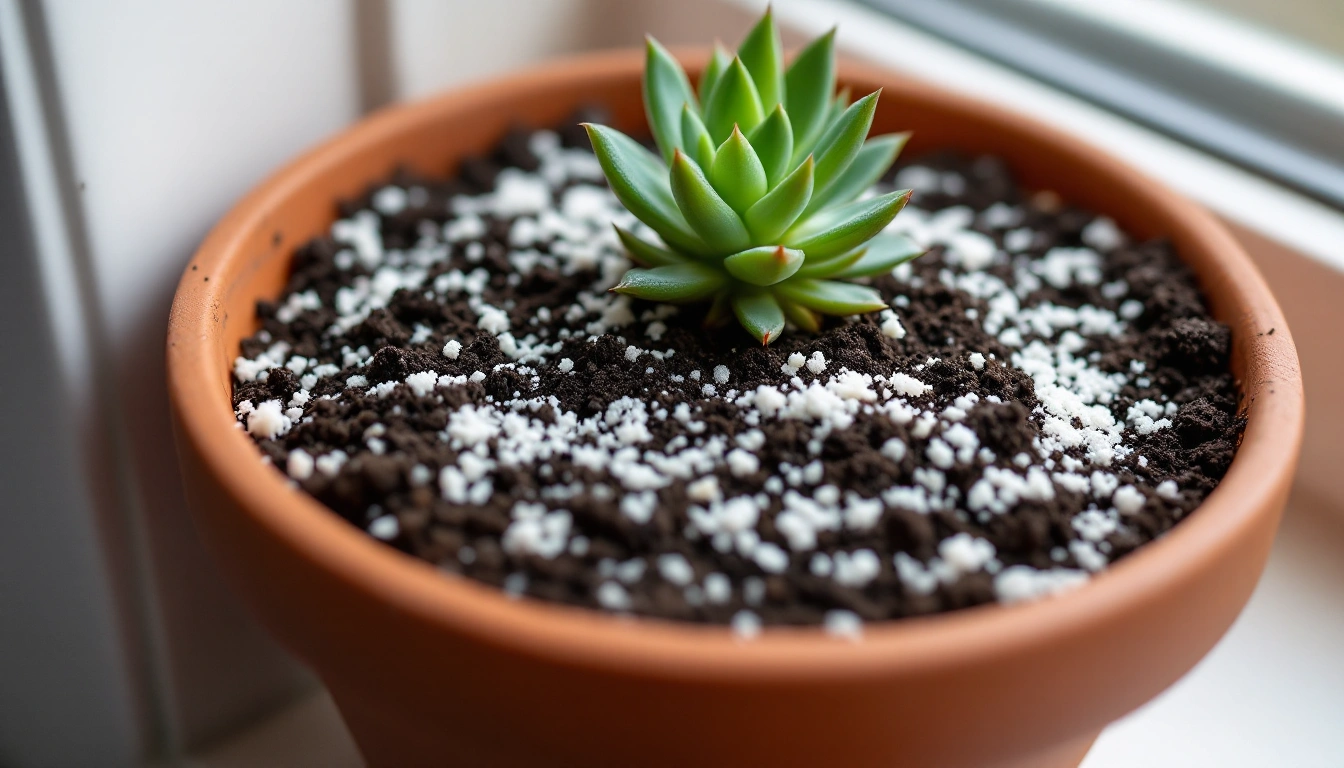
- Perlite is made of small, white, popcorn-like particles that are mostly air pockets inside a glassy mineral shell. When mixed through soil, those particles keep the soil from compacting into a dense, water-holding block. Water drains through the gaps between particles instead of pooling, and oxygen can reach the roots even when the soil is damp. This matters because roots that sit in waterlogged, low-oxygen soil for too long are prone to rot.
How much perlite to use, by plant type
There's no single correct ratio, but a few common starting points:
General houseplants that want soil to dry out somewhat between waterings: roughly 10 to 25 percent perlite mixed into a standard potting soil.
Succulents and cacti that want the mix to dry out fast and completely: roughly 30 to 50 percent perlite, sometimes combined with pumice or coarse sand for even more drainage.
Moisture-loving plants like many ferns: often little to no added perlite, since these plants prefer soil that stays evenly moist.
These ranges are starting points, not fixed rules - adjusting up or down based on how the mix behaves in your specific pot, climate, and watering habits is normal.
Mixing perlite into a potting mix
The basic process is straightforward: measure out your base potting soil, add the perlite in roughly the ratio you're aiming for, and combine thoroughly so the perlite is distributed evenly rather than sitting in pockets or settling to one side. Doing this in a wide, shallow container rather than a narrow bag makes it easier to mix evenly. Because perlite dust can be irritating to breathe, lightly dampening it before mixing cuts down on dust.
A bag of horticultural perlite mixed at these ratios covers several repottings, since only a fraction of most mixes is perlite by volume.
Signs you've got the ratio right
Water runs through the drainage hole within seconds of watering, not minutes.
The mix doesn't stay soggy for days after watering.
The perlite is visible throughout the mix, not settled at the top or bottom.
If water is still pooling or the surface stays wet for a long time, more perlite (or another mineral component) usually solves it. If the plant is drying out faster than it should and wilting between waterings, the ratio may be too high for that particular plant.
Perlite potting vs. other drainage materials
- Perlite isn't the only option for improving drainage - pumice, coarse sand, and vermiculite are common alternatives or additions, each with different weight and water-holding properties. For a direct comparison with the material most often confused with perlite, see perlite vs vermiculite. For the fuller picture on perlite as a material, see the perlite overview.
Common mistakes when potting with perlite
A few issues come up often enough to call out specifically:
Not mixing thoroughly. Perlite that's just stirred once or twice tends to settle unevenly, leaving some pockets of soil with almost none and others with too much. Mixing until the perlite looks evenly distributed throughout, not just on the surface, matters more than the exact ratio.
Skipping the dust precaution. Dry perlite is dusty, and pouring it straight from the bag without dampening it first can send fine particles into the air. A light spray of water before mixing solves this with little effort.
Assuming more is always better. It's easy to think a super-porous mix is automatically safer for a plant, but too much perlite can leave a mix that dries out faster than the plant can handle, or drains so fast that fertilizer and water pass through before the roots absorb much of either.
Forgetting the pot still needs a drainage hole. Perlite improves how the mix itself behaves, but it doesn't replace the need for excess water to actually leave the container. A perlite-rich mix in a pot with no drainage hole can still end up waterlogged at the bottom.
Perlite potting for repotting an established plant
- When repotting a plant that's already growing in a mix without much perlite, gently work some of the old soil away from the roots before introducing the new perlite-amended mix around them. Trying to blend a large amount of new perlite directly into old, compacted soil already in the pot doesn't distribute it evenly and defeats the purpose. A full repot with fresh, properly mixed soil gets a more even result than top-dressing or spot-mixing perlite into an existing pot.
Storing leftover perlite
- Perlite doesn't spoil or degrade sitting in a bag, since it's an inert mineral rather than organic matter. Keeping the bag closed and dry mostly just prevents dust from spreading and keeps the bag from tearing further; there's no expiration concern the way there is with a bag of compost or a bale of peat that can break down over time in storage.
FAQ
How much perlite should I add when potting a plant?
For a typical houseplant that wants "well-draining but not bone dry" soil, 10 to 25 percent perlite mixed into a standard potting soil is a common starting range. For succulents and cacti, that ratio usually goes up to 30 to 50 percent since those plants want the mix to dry out fast.
Can I add too much perlite to a potting mix?
Yes. Too much perlite can leave a mix so porous that water and nutrients run through before the roots can use them, and the mix may dry out faster than the plant can tolerate between waterings. It also tends to float and separate from the soil over time if the ratio is very high.
Does perlite go on top of the soil or mixed in?
For potting mix purposes, it gets mixed evenly through the soil, not layered on top. A layer of coarse material at the very bottom of a pot for drainage is a separate, less commonly recommended practice - mixing perlite through the whole root zone does more for drainage than a bottom layer does.
Do all plants need perlite in their potting mix?
No. Plants that want consistently moist soil, like many ferns or tropical foliage plants, often do fine with little to no added perlite. It's most valuable for plants that specifically need the soil to dry out between waterings, like succulents, cacti, and many houseplants prone to root rot in soggy soil.