
Potting & Soil Mixes
Peat Sphagnum Moss: What It Is and How to Use It
The short answer
Peat sphagnum moss usually refers to dried, partially decomposed sphagnum peat sold as a soil amendment, which is a different product from live sphagnum moss sold in strands for lining baskets or wrapping roots.
Last updated September 2026
| What it is | Sphagnum moss that has partially decomposed in a bog over a long time, then harvested, dried, and milled into peat |
|---|---|
| Not the same as | Live (or dried whole) sphagnum moss, which is the intact plant sold as long fibrous strands |
| pH | Naturally acidic, roughly pH 3.5–4.5 before any amendments are added |
| Main use | Blended into potting mixes as the moisture-retaining, bulking component |
| Nutrient content | Essentially none - it adds structure and water retention, not fertility |
Scroll for more →
What's covered14
- Two different products, one confusing name
- How peat sphagnum moss forms
- What it does in a potting mix
- When to use it, and when not to
- Mixing it in
- The bottom line
- Rehydrating a compressed bale
- How peat moss compares to other moisture-retaining amendments
- Buying peat moss responsibly
- Testing whether your mix needs more peat moss
- How peat sphagnum moss forms over long timescales
- What "milled" means for the product you buy
- Peat moss and acid-loving plants in practice
- A note on identifying which product you have
Your choice of peat sphagnum moss affects water and air around the roots. Compare peat sphagnum moss by drainage, water storage, and fit for the plant. Use this peat sphagnum moss guide to see the main trade-offs.
- Peat sphagnum moss usually means dried, milled sphagnum peat sold as a soil amendment, not the live moss sold in strands. Both start as the same plant, sphagnum moss, but one is the intact living material and the other is what's left after it partially decomposes in a bog over a long stretch of time.
Two different products, one confusing name
Garden centers sell two things under overlapping names:
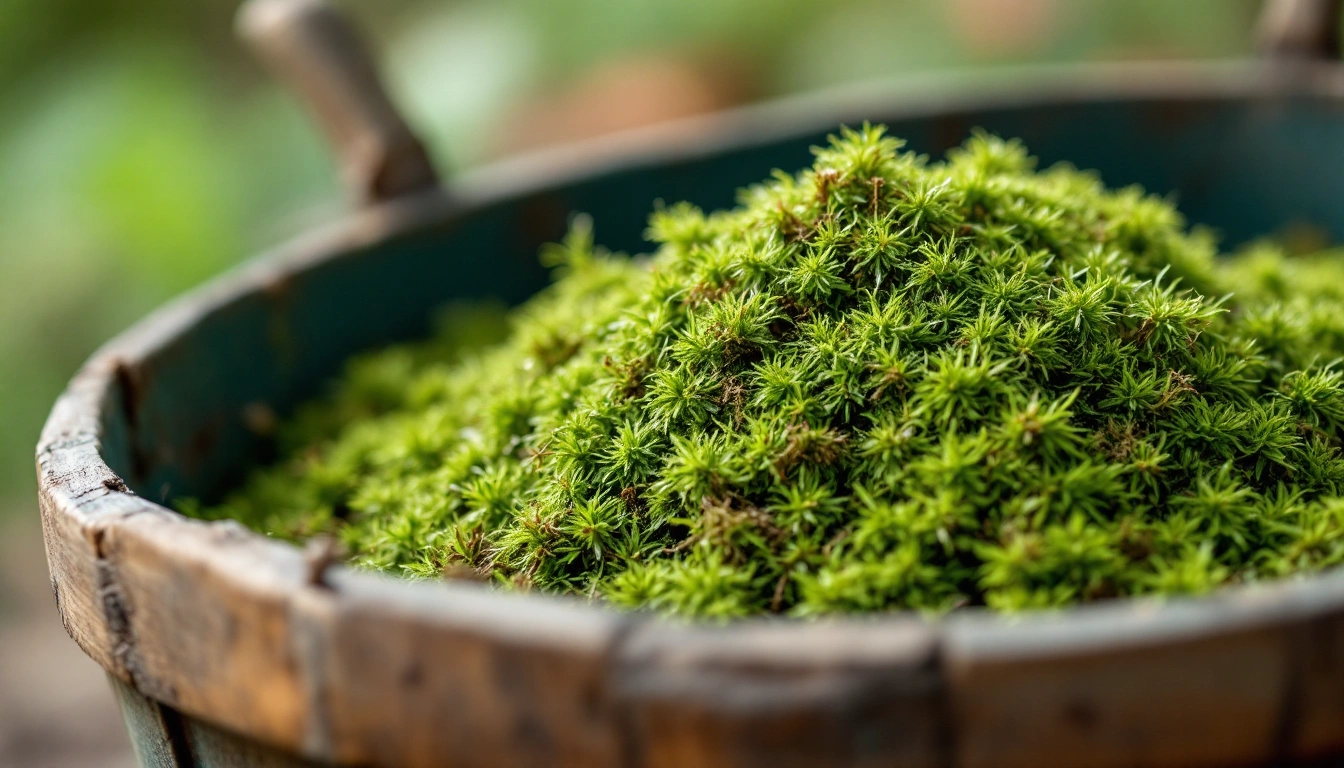
Live or dried sphagnum moss - the intact plant, harvested from the surface of a bog and sold as long, fibrous strands. This is what people use to line hanging baskets, wrap around cuttings for humidity, or top-dress a pot.
Sphagnum peat moss (peat sphagnum moss) - the older, partially decomposed layer underneath, harvested, dried, and milled into a fine, crumbly peat. This is the ingredient that shows up in bagged potting mixes.
When a potting mix recipe or a bag label says "peat moss" or "sphagnum peat moss," it means the decomposed peat product, not the stringy surface moss.
How peat sphagnum moss forms
- Sphagnum moss grows on the surface of a bog. As older growth dies back, it sinks into the waterlogged, low-oxygen conditions below, where decomposition slows dramatically. Over centuries, that slow-decomposing layer builds up into peat. Harvesting cuts into this accumulated layer, which is why peat is considered a slow-to-renew resource - the bog can take a very long time to rebuild what's removed.
What it does in a potting mix
Once dried and milled, peat moss holds a large amount of water relative to its weight and adds bulk and structure to a mix without adding real nutrition. In a bagged potting mix, it's typically the base ingredient that gives the mix its moisture-holding character, with other components like perlite or bark added to keep it from compacting and staying too wet.
Raw peat runs acidic, generally in the low-to-mid 3 to 4 pH range, so most commercial bagged mixes add lime during production to bring the overall pH closer to neutral for general houseplant use.
When to use it, and when not to
Peat sphagnum moss is a reasonable choice when:
- You're building or buying a mix for acid-loving plants like blueberries or certain orchids, where its natural acidity is an advantage rather than something to correct.
- You want a moisture-retentive base for plants that don't like to dry out completely between waterings.
It's less ideal, or needs heavy amending, when:
- You're potting succulents or cacti, which want a fast-draining mix - peat alone holds far too much water for these plants.
- You're trying to avoid a slow-to-renew resource for sustainability reasons; coco coir is the common substitute.
Mixing it in
- A simple approach for general houseplants is peat moss blended with a mineral component like perlite for drainage, plus a smaller amount of compost or worm castings for nutrients, since peat itself doesn't feed the plant. A compressed bale of sphagnum peat moss expands substantially once broken up and rehydrated, so a small bale goes further than it looks.
The bottom line
- If a recipe, label, or plant care guide says "peat moss" or "peat sphagnum moss," assume it means the milled peat product used as a soil amendment, not the stringy live moss sold for basket lining. Checking which one a source means before buying saves a wasted trip, since the two aren't interchangeable for most uses.
Rehydrating a compressed bale
- Peat moss is typically sold compressed into a dense bale, and it can be surprisingly hydrophobic when bone dry - water may run off the surface or form beads instead of soaking in right away. Breaking up chunks of the dry material and working water through gradually, rather than dumping water on top and expecting it to absorb instantly, gets an even, workable moisture level throughout. Wearing a mask or working in a ventilated area while breaking up dry peat cuts down on inhaling the fine dust it can release.
How peat moss compares to other moisture-retaining amendments
- Peat moss isn't the only organic material used for moisture retention in potting mixes. Coco coir does a similar job with a more neutral pH and a more renewable source, which is why it's become a common substitute in recent years - see peat moss vs coco coir for a direct comparison. Compost and aged bark are other organic options, generally with less water-holding capacity than peat but more nutrient content.
Buying peat moss responsibly
- Because of the sustainability concerns tied to bog harvesting, some regions and retailers have started labeling peat products with sourcing information, and some growers choose to limit peat use to situations where its specific acidity is genuinely useful rather than using it as a default moisture amendment. This isn't a strict rule, just a growing consideration among gardeners who want to be thoughtful about a slow-to-renew resource.
Testing whether your mix needs more peat moss
- If a potting mix dries out unusually fast and a plant that wants consistent moisture is struggling to keep up with watering, adding more peat moss (or another moisture-retentive organic material) to the next repotting can help. Conversely, if a mix that's heavy on peat is staying wet for many days after watering, cutting the peat ratio and adding more of a mineral component like perlite corrects it.
How peat sphagnum moss forms over long timescales
- The transformation from live sphagnum moss into peat is a genuinely slow geological-scale process, not something that happens over a single season. As the moss grows and the older growth beneath it dies back, it sinks into the cold, waterlogged, oxygen-poor conditions at the bottom of the bog. Those conditions dramatically slow the microbial activity that would normally break plant material down quickly, so instead of fully decomposing, it accumulates as a dense, partially broken-down layer over centuries. This is why peat is often described as a slow-to-renew resource: the accumulation rate is measured in millimeters per year in many bogs, while a harvesting operation can remove a meaningful depth of material far faster than that.
What "milled" means for the product you buy
- Once harvested, the peat layer is dried and put through a milling process that breaks it into the fine, somewhat fibrous texture familiar from bagged potting mixes. Milling grade can vary - some products are coarser, retaining more visible fiber structure, while others are finer and more uniform. Coarser milled peat tends to hold its structure a bit longer in a mix before compacting, while finer grades blend more seamlessly but may compact faster under repeated watering.
Peat moss and acid-loving plants in practice
- For plants that specifically want acidic soil, like blueberries, azaleas, camellias, and many orchids, peat moss's natural acidity can be a genuine advantage rather than something to correct. Growers of these plants sometimes deliberately seek out a peat-heavy mix, or add peat to an existing mix, specifically to nudge the pH lower and keep it in the range these plants prefer. This is one of the clearer cases where peat's specific properties outperform a neutral-pH alternative like coco coir for the task at hand.
A note on identifying which product you have
- If you're unsure whether a bag on a shelf is peat sphagnum moss or live sphagnum moss, checking the texture is a reliable way to tell. Peat moss looks like a fine, dark, somewhat crumbly material, similar in texture to a coarse compost. Live or dried whole sphagnum moss looks like long, pale, stringy fibers that hold together in strands rather than a loose, granular texture. If a bag's contents look stringy and fibrous rather than fine and crumbly, it's very likely the live/whole moss product rather than the peat.
FAQ
Is peat sphagnum moss the same as sphagnum moss?
Not quite. "Sphagnum moss" on its own usually means the live or dried intact plant, sold in long strands and often used to line hanging baskets or wrap around roots for humidity. "Peat sphagnum moss" (or sphagnum peat moss) refers to the older, decomposed layer of that same moss harvested from bogs and milled into a fine peat product used in potting mixes.
Can I use peat sphagnum moss by itself to pot a plant?
It's not a good idea on its own. Peat holds a lot of water and compacts over time, which can suffocate roots without other material mixed in. It works best blended with a mineral component like perlite and, for many plants, some compost or bark for structure and nutrients.
Why is peat moss acidic?
The decomposition process in a peat bog produces organic acids, and the low-oxygen, waterlogged bog environment slows further breakdown, locking in that acidity. This makes raw peat naturally suited to acid-loving plants, though most bagged potting mixes add lime to bring the pH closer to neutral for general use.
Is peat moss safe to use every time I repot?
Peat moss itself isn't unsafe, but it does have sustainability concerns since bogs regenerate slowly. Using it isn't harmful to your plants; it's more a question of whether you want to rely on a slow-to-renew resource versus alternatives like coco coir for routine repotting.