
Potting & Soil Mixes
Peat Moss vs Coco Coir: Which Belongs in Your Potting Mix
The short answer
Peat moss and coco coir both hold moisture and add bulk to a potting mix, but coco coir is the more renewable choice with a near-neutral pH, while peat moss is slightly acidic and comes from a slow-to-regenerate bog resource.
Last updated September 2026
| Source | Peat moss: harvested from bogs, slow to regenerate. Coco coir: a byproduct of coconut husk processing |
|---|---|
| pH | Peat moss: slightly acidic (roughly pH 3.5–4.5 raw). Coco coir: near-neutral (roughly pH 5.5–6.5) |
| Renewability | Coco coir is considered more renewable since it's a byproduct of an existing crop; peat forms over centuries in bogs |
| Form when purchased | Peat moss: loose bales. Coco coir: often compressed bricks or blocks that expand once rehydrated with water |
| Water behavior | Both hold water well, but coco coir tends to rewet more easily once it has dried out compared to peat |
Scroll for more →
What's covered14
- What each material actually is
- Peat moss vs coco coir side by side
- Why pH matters here
- Water-holding differences worth knowing
- Sustainability considerations
- Which one to choose
- Handling and preparing each material
- Salt content: a coco coir consideration
- Longevity in a mix
- A practical middle ground
- Texture and structure differences
- Drainage behavior in practice
- Environmental and shipping considerations
- What this means for buying decisions
Peat moss and coco coir serve different needs in a plant pot. This guide compares peat moss with coco coir. Choose the one that fits your plant and care routine.
- Coco coir is the more renewable option between the two, made from coconut husk byproduct with a near-neutral pH, while peat moss is harvested from bogs that regenerate slowly and runs slightly acidic. Both do a similar job in a potting mix: they hold moisture and add bulk, but they differ enough in sourcing and pH that the choice matters for some plants.
What each material actually is
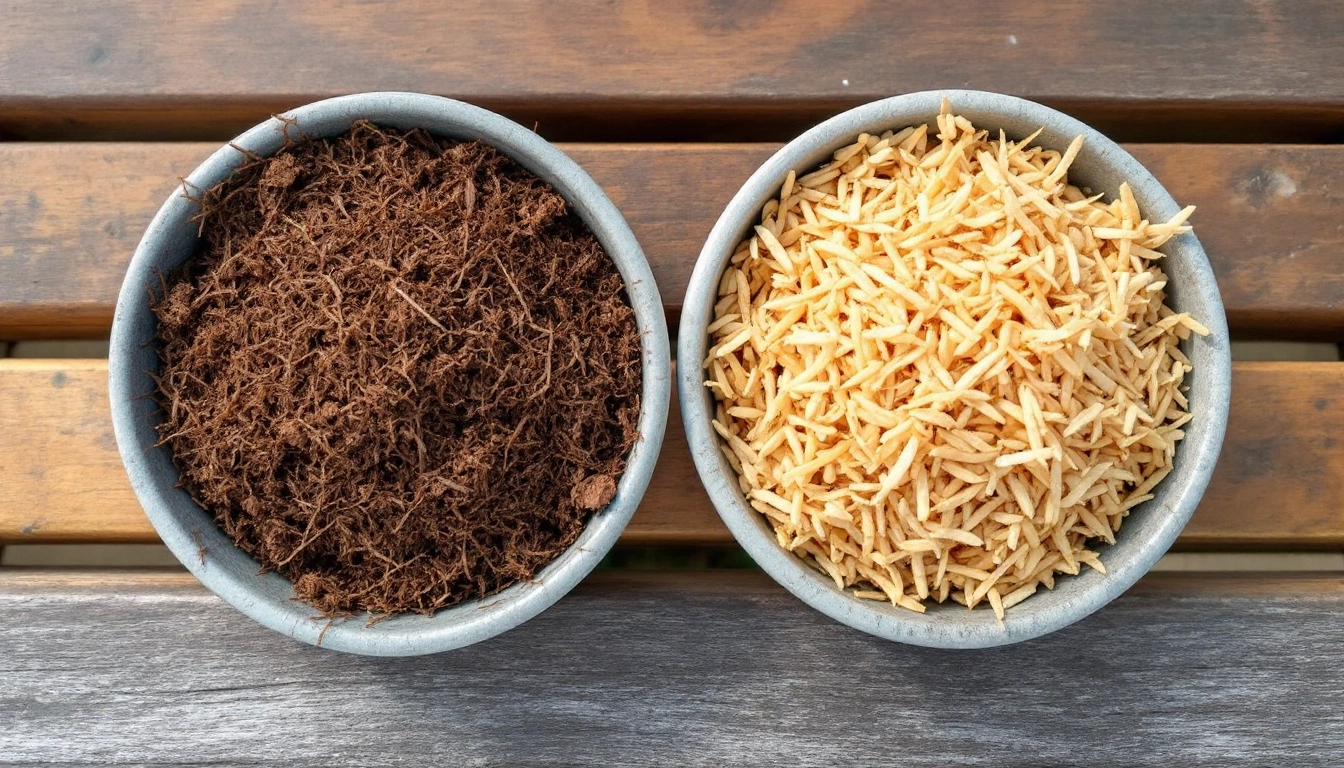
Peat moss is partially decomposed sphagnum moss and other plant material, harvested from peat bogs, then dried and milled for use in potting mixes. Bogs take centuries to form the peat layer that gets harvested, which is why sustainability groups raise concerns about extraction rates outpacing regeneration.
Coco coir comes from the fibrous husk of coconuts, a material that used to be discarded as waste from the coconut industry. Processors wash, age, and compress it into bricks, bales, or loose bags. Because it's a byproduct of a crop already being grown for food and fiber, it's generally viewed as the more renewable of the two.
Peat moss vs coco coir side by side
| Peat Moss | Coco Coir | |
|---|---|---|
| Source | Harvested from bogs | Byproduct of coconut husk processing |
| Renewability | Slow to regenerate, sustainability concerns | Considered more renewable |
| pH | Slightly acidic (roughly 3.5–4.5 raw) | Near-neutral (roughly 5.5–6.5) |
| Nutrient content | Essentially none | Essentially none |
| Purchase form | Loose bales | Often compressed bricks that expand with water |
| Water retention | Holds water well, can be slow to rewet once fully dry | Holds water well, rewets more easily after drying out |
| Best fit | Acid-loving plants, blueberries, some orchids | General potting mixes, plants sensitive to pH swings |
Scroll for more →
Why pH matters here
- Peat moss's natural acidity is useful for plants that specifically want acidic soil, like blueberries or certain orchids. For general houseplants that prefer a near-neutral range, that acidity has to be balanced out, often with lime added to the mix. Coco coir's near-neutral pH means it usually doesn't need that extra balancing step, which makes it a simpler base for a wide range of houseplants.
Water-holding differences worth knowing
- Both materials hold a lot of water relative to their weight, which is why they show up in potting mixes as the moisture-retaining component. The practical difference shows up when either one dries out completely: peat moss can become hard to rewet, sometimes shedding water off its surface until it's worked back in, while coco coir tends to absorb water again more readily after a full dry-out. For a plant prone to drying between waterings, that difference can matter.
Sustainability considerations
- Coco coir's renewability advantage comes from being a byproduct rather than a primary harvested resource - coconuts are grown for their meat, milk, and oil, and the husk used to be waste. Peat's sustainability issue comes from the slow rate at which bogs regenerate compared to how fast they can be harvested, along with the ecological role peat bogs play in carbon storage. Neither material is entirely without impact: coir still involves processing, retting, and shipping, and buying it from farther away adds transport considerations that a locally available peat product might not have.
Which one to choose
- For most general-purpose potting mixes, coco coir is a reasonable default thanks to its neutral pH and renewable sourcing. Reach for peat moss specifically when a plant wants acidic soil, or when you already have a working recipe built around peat's characteristics and don't want to rebalance the pH. A compressed coco coir brick rehydrates into enough loose material to mix into several pots' worth of soil.
- Whichever base you pick, remember it's just one part of a full potting mix. For drainage and aeration, that base still needs a mineral component like perlite mixed in, especially for plants that don't want to sit in constant moisture.
Handling and preparing each material
Peat moss comes compressed in bales and can be somewhat dusty and hydrophobic when completely dry - water may bead up and run off the surface at first instead of soaking in. Breaking it up and working water through it gradually, rather than pouring water on top and expecting instant absorption, gets it evenly moist.
Coco coir usually arrives even more compressed, often as bricks or discs that look deceptively small. Soaking a brick in water causes it to expand dramatically, sometimes to several times its dry volume, so it's worth rehydrating it in a large container rather than a small bucket. Once expanded, it breaks apart easily into a loose, fibrous material that's simple to fold into a mix.
Salt content: a coco coir consideration
- One difference worth knowing: raw coco coir can carry natural salts from the coconut processing and can also bind calcium and magnesium out of the water and fertilizer you apply, a process sometimes called cation exchange. Many commercial coir products are pre-washed and buffered to reduce this issue, but if you notice a plant in a coir-heavy mix showing nutrient deficiency symptoms despite regular feeding, it's worth considering whether the coir is tying up certain nutrients. Peat moss doesn't have this particular issue, since it isn't processed the same way.
Longevity in a mix
- Both materials break down over time as they're watered and handled, gradually losing structure and compacting. Neither one is a permanent, non-degrading component the way a mineral like perlite is - both are organic matter, and organic matter decomposes. This is one more reason most mixes built around either peat or coir also include a mineral component: it's the part of the mix that keeps its structure even as the organic portion breaks down.
A practical middle ground
- Some growers split the difference by blending small amounts of both peat and coco coir into the same mix, aiming for the moisture-holding qualities both offer while diversifying away from relying entirely on one resource. This isn't necessary for most houseplants, but it's a reasonable approach if you already have both on hand or want to hedge on sustainability and pH considerations at once.
Texture and structure differences
- Beyond pH and sustainability, the two materials also feel and behave a little differently once mixed into soil. Peat moss has a fine, somewhat spongy texture that can compact over time, gradually losing some of its structure and air-holding ability as it breaks down under repeated watering. Coco coir tends to have a slightly coarser, more fibrous texture that some growers find resists compaction a bit longer, holding its structure through more watering cycles before it needs replacing. Neither difference is dramatic, but it's noticeable to growers who work with large volumes of either material regularly.
Drainage behavior in practice
- Because both materials hold a large amount of water, neither one is well suited to being the sole ingredient in a fast-draining mix for succulents or cacti. The real-world difference between them shows up more in how they behave at the extremes: a peat-heavy mix that's allowed to dry out completely can become difficult to rewet evenly, sometimes shedding water off the surface in a phenomenon sometimes described as hydrophobic behavior, until it's worked back into a moist state. A coco coir mix that dries out tends to reabsorb water more readily on the next watering, which some growers find more forgiving for plants that occasionally miss a scheduled watering.
Environmental and shipping considerations
- Coco coir's renewability advantage is partly offset by the fact that most of it is produced in tropical coconut-growing regions and shipped internationally to reach many markets, which adds transportation impact that a locally sourced peat product might not carry to the same degree, depending on where you live relative to peat bogs and coconut-processing regions. Neither material is a perfect environmental choice in every respect, and factors like these are worth weighing alongside the more commonly cited bog-depletion concern around peat.
What this means for buying decisions
- For a grower without a strong reason to prefer one or the other, coco coir's neutral pH and renewable sourcing make it a sensible general-purpose default for most potting mixes. Peat moss remains a reasonable and even preferable choice for specific situations - acid-loving plants, or simply continuing to use an established recipe that already accounts for its acidity. Both remain widely available and neither should be considered a wrong choice outright; the differences are more about fit for a specific use case than one material being universally superior.
FAQ
Can I substitute coco coir for peat moss one-to-one in a recipe?
Mostly yes, by volume. The main adjustment is pH - if a recipe assumes peat's acidity for acid-loving plants, swapping in coco coir means the mix will run closer to neutral, so you may need a separate acidifying amendment for plants that specifically want acidic soil.
Is coco coir actually better for the environment than peat moss?
Coco coir is generally considered the more sustainable option because it comes from coconut husks, a byproduct of an existing food and fiber crop, while peat forms over centuries in bogs that take a long time to recover once harvested. Neither is without any environmental footprint - coir requires processing and shipping - but coir avoids the bog-depletion concern tied to peat.
Does coco coir come with any nutrients already in it?
No, coco coir is essentially inert like peat moss. Both add structure and water-holding capacity but little to no nutrition on their own, so a potting mix built around either one still needs fertilizer or compost added for feeding the plant.
Which one is better for succulents?
Neither is ideal on its own for succulents, since both hold a lot of moisture. If you use either as a base, cut it heavily with perlite, pumice, or coarse sand so the finished mix drains fast instead of staying wet.