
Potting & Soil Mixes
Grow Tent Setup: What to Install First
The short answer
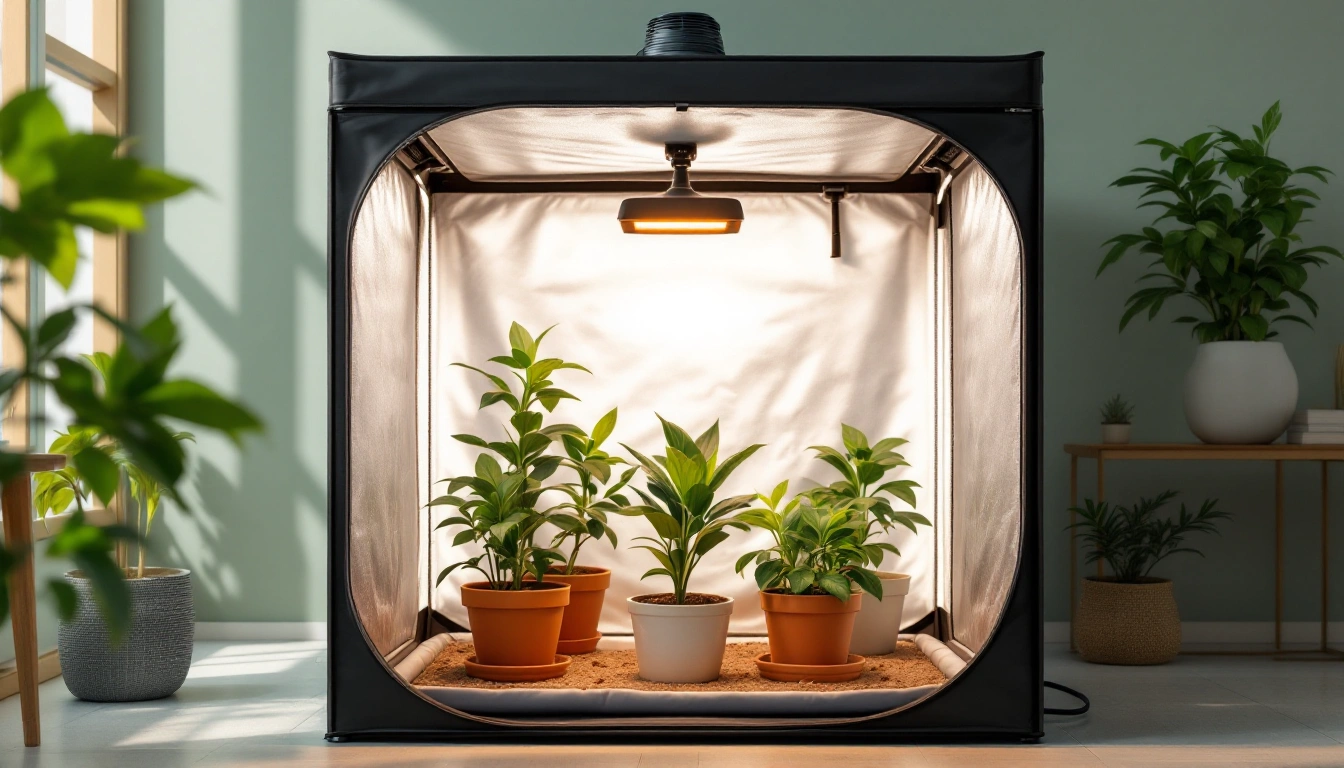
A grow tent setup works when the frame is sealed, a grow light covers the canopy in the photosynthetically active radiation (PAR) range, an exhaust fan swaps hot humid air for fresh air, a second fan mixes air inside, and each plant sits in the right pot and potting mix for its size.
Last updated November 2026
| Frame and liner | Metal poles and fabric shell with reflective inner lining, floor tray, and cable/lighting ports |
|---|---|
| Grow light | LED or fluorescent fixture sized to the tent footprint; rated for PAR, not lumens alone |
| Ventilation | Exhaust fan at the top plus passive or louvered intake low on the opposite side |
| Circulation | Small oscillating or clip-on fan to move air through the plant canopy |
| Containers and media | Pots with drainage and a potting mix or soilless medium matched to the crop |
Scroll for more →
What's covered8
Set up a grow tent by building the frame, mounting a PAR-rated grow light, ducting an exhaust fan with a low intake, adding an inside circulation fan, and filling pots with the right mix for each crop. That combination controls light, heat, humidity, and airflow in one small room.
- A grow tent is a fabric-lined frame that holds in light and heat while you control air and water. The useful setup is not the tent cloth alone. You need a grow light hung level over the plants, an exhaust fan that pulls moist air out through the top, a fresh-air opening low on the other side, a small fan that moves air across leaves, and containers with media that matches how much water the crop wants. University extension guides on indoor growing and greenhouse ventilation treat those pieces as one system.
Pick tent size before you buy parts
- Measure the floor space you can spare, including room to open the door and reach every corner.
- Count how many mature plants you want, each with its own pot width and height at harvest.
- Add headroom for the light fixture plus the gap the light maker lists between the lamp and the plant tops.
- Leave space along one wall for a fan, ducting, and cords without blocking the intake.
A tent that is too small crowds roots and blocks airflow. One that is too large wastes light on empty floor and makes it harder to hold steady humidity.
A grow box setup fits the same pots and mixes into a rigid cabinet when you want a door and fixed shelves instead of a fabric tent.
Assemble the frame and liner
- Lay out poles and corner connectors on a clean floor inside the tray area.
- Build the base rectangle first, then snap or screw vertical posts and the top frame.
- Slide the fabric cover over the frame, starting from the top if the maker instructs that way.
- Zip the door and check that cable and duct ports line up with your planned fan and light routes.
- Set the waterproof floor tray inside so drips stay off the room floor.
Most kits follow the same order: base, uprights, roof, then fabric. Tighten joints until the frame does not wobble, but do not crush soft aluminum poles.
Hang the grow light
Controlled environment guides from MU Extension stress that indoor tents rely entirely on supplemental light, and that fixture heat matters in tight spaces. High-pressure sodium lamps run hot enough to burn leaves in a short tent; LEDs and fluorescents are the common choices when plants sit only a few inches to a few feet below the lamp.
- Attach the hanger or crossbar included with the tent, or a sturdy bar rated for the fixture weight.
- Connect the light power cord through the nearest pass-through port.
- Raise the fixture to the upper end of the maker's height range before you add plants.
- Plug the light into a timer so photoperiod stays even day to day.
When you shop, look for spectrum graphs and photosynthetic photon flux density (PPFD) maps in the PAR range (about 400–700 nanometers), not lumens or Kelvin color temperature alone, which describe what human eyes see rather than what leaves use for photosynthesis (MU Extension, February 2025).
Set up exhaust and intake airflow
UVM Extension separates ventilation (swapping inside air for outside air) from circulation (mixing air already in the space). A grow tent needs both.
Exhaust and intake
- Mount an inline exhaust fan in the top vent so warm, humid air leaves first.
- Cut or route flexible duct from the fan to a window, wall port, or adjacent room outlet.
- Open the passive vent or mesh window low on the side opposite the fan so fresh air replaces what the fan pulls out.
- If odor control is required for your crop, place a carbon filter between the tent port and the fan, following the filter maker's rated airflow.
Greenhouse engineering references summarized by UVM Extension size ventilation near 8 CFM per square foot of growing floor for hot-season use and about 2 CFM per square foot for cool-season use (Bartok and Aldrich, Greenhouse Engineering, NRAES-33, as cited by UVM Extension). For a 4 by 4 foot tent (16 square feet), the hot-season rule points to roughly 128 CFM of exhaust before duct or filter losses.
Circulation inside the tent
- Clip a small oscillating or fixed fan to a pole so air moves across the canopy, not just along the floor.
- Aim for enough leaf movement to see stems sway slightly without flattening plants.
- Keep the fan off the floor where water pools in the tray.
If you ventilate without circulating, corners stay stagnant. If you circulate without ventilating, heat and humidity climb even when leaves appear to move (UVM Extension, August 2019).
Add pots, mix, and watering tools
Grow tents work with soil pots, soilless bags, or semi-hydro containers. Match the media to the plant, not the tent size.
| Crop type | Container and media |
|---|---|
| Leafy herbs and greens | Pots with drainage holes and general container potting mix |
| Succulents and cacti | Shallow pots with drainage and fast-draining succulent mix heavy on perlite or pumice |
| Vining houseplants | Sturdy pot plus trellis or pole and chunky aroid-style mix with bark and perlite |
| Soilless or drip-fed crops | Net pots or slabs with coco coir, rockwool, or LECA and a nutrient reservoir |
Scroll for more →
Place the largest plants toward the sides and keep a walking path to the back row for watering and pruning. Elevate pots slightly on grates or saucers so the tray stays easy to rinse.
The main succulent potting mix guide groups mix types by drainage. For a full indoor collection beyond the tent, see potting mix for indoor plants. Semi-hydro growers often pair tents with coco coir hydroponics or LECA reservoirs instead of hand-watering pots.
Dial in temperature, humidity, and light height
Virginia Cooperative Extension notes that indoor controlled environments may use ventilation fans, shade, or building HVAC to hold temperature, depending on structure type (SPES-751). A home tent usually relies on the exhaust fan, optional small heater in winter, and dehumidifier or humidifier when readings drift.
- Hang a thermometer and hygrometer at canopy height.
- Run the light and fans on your planned day/night schedule with empty pots in place.
- Note peak temperature and humidity one hour after lights-on and again before lights-off.
- Lower or raise the fixture in small steps if leaf edges show heat stress, using the clearance range from the light maker.
- Adjust exhaust speed or intake opening size if humidity stays high after lights-off.
Cornell Cooperative Extension Madison County reminds growers that enclosed sunny spaces can pass 110°F without enough venting, and that seedlings need strong light from emergence so stems do not stretch. For close tube or LED setups, keeping plant tops about 2–6 inches below the lamp often keeps seedlings stocky until you move them to final spacing.
WSU Extension's indoor grow-stand guide lists daily run times around 8–10 hours for herbs under fluorescents and longer for vegetable starts. Support hangars from ceiling beams or rated frame bars, not drywall alone.
Daily checks once plants move in
- Confirm the timer and fans still run after a power blip.
- Water when the mix for that crop dries to its target, not on a fixed calendar.
- Trim leaves that touch ducting or fan blades.
- Wipe salt buildup from reservoirs in hydro setups.
- Re-measure canopy height weekly and raise lights before leaves touch the fixture.
Equipment snapshot
| Piece | Role in the tent |
|---|---|
| Exhaust fan + duct | Removes heat and humidity; pulls in fresh air through the low vent |
| Circulation fan | Mixes air so all plants see similar temperature and humidity |
| Grow light + timer | Supplies PAR on a steady photoperiod |
| Floor tray | Catches runoff and protects the room floor |
| Pots with drainage | Keeps roots in media matched to the crop, not standing water |
| Thermometer / hygrometer | Shows whether dial-in settings still hold |
Scroll for more →
FAQ
Do I need both an exhaust fan and a circulation fan in a grow tent?
Yes, for the same reasons greenhouse guides separate the two jobs. The exhaust fan brings in drier outside air and removes heat and humidity. The circulation fan stirs air inside so leaves at the edges get the same conditions as plants in the center. Running only one type often leaves hot corners or stale, humid pockets.
How far should grow lights sit above the plants?
It depends on the fixture heat and intensity. Maryland Extension (updated August 14, 2026) lists 2 to 6 inches above plants for both fluorescent and LED fixtures, with final height set from the light maker's clearance guidance so leaves do not burn as they grow.
What size exhaust fan does a small grow tent need?
Greenhouse engineering references size ventilation as cubic feet per minute (CFM) per square foot of growing floor. For warm-season growing, planners often target about 8 CFM per square foot of floor area. A 4 by 4 foot tent has 16 square feet, so that rule of thumb points to roughly 128 CFM of exhaust capacity before counting duct bends or a carbon filter, which slow airflow.
Can I use regular potting soil from a garden center in a grow tent?
Bagged potting mix made for containers is the right starting point for soil-based crops. It drains better than garden soil and is less likely to compact in a pot. Fast-draining mixes still matter for succulents, and soilless or hydroponic media suit some indoor systems better than dense soil.
How long should grow lights run each day?
It depends on the crop and the fixture's intensity. WSU Extension lists about 8–10 hours under fluorescents for herbs and leafy greens and up to 12–14 hours for vegetable seedlings.
When is the tent ready for plants?
After assembly, run the light and both fans with empty pots for a day or two. Check temperature, humidity, and light height with a thermometer and hygrometer at plant height. Adjust fan speed, light height, and timer length until readings stay in a steady band before transplanting.