
Potting & Soil Mixes
Potting Mix for Indoor Plants: A Full Buying Guide
The short answer
There's no single potting mix for indoor plants - the right choice depends on the specific plant's water and drainage needs, ranging from fast-draining succulent mixes to moisture-retentive mixes for tropical foliage, with a general-purpose mix covering most plants in between.
Last updated September 2026
| General houseplant mix | A balanced blend of organic material (peat or coco coir) with a moderate amount of perlite for drainage |
|---|---|
| Succulent/cactus mix | Heavier on mineral content - perlite, pumice, or sand - for fast, complete drainage |
| Moisture-loving plant mix | More organic material, less perlite, to hold water longer between waterings |
| Aroid/chunky mix | Bark, perlite, and sometimes charcoal added for extra airflow around thick roots |
| Universal requirement | A pot with a drainage hole, regardless of which mix is used |
Scroll for more →
What's covered22
- Why one mix doesn't fit every houseplant
- General-purpose potting mix
- Succulent and cactus mix
- Moisture-loving foliage plants
- Chunky mixes for aroids and epiphytic plants
- Seed-starting and propagation mixes
- Matching mix to plant: a quick reference
- Amending instead of buying separately for every plant
- The pot matters as much as the mix
- Refreshing potting mix over time
- Why plant origin is the best predictor of mix needs
- Nutrient content differences between mix types
- Building a mix from base ingredients
- Testing a mix before committing a plant
- Signs a mix mismatch is affecting a plant
- Adjusting an existing mix instead of starting over
- Humidity, temperature, and mix interaction
- Container choice alongside mix selection
- Fertilizing on top of the right mix
- Repotting frequency across categories
- Combining categories for mixed plant collections
- Related reading
Your choice of potting mix for indoor plants affects water and air around the roots. Compare potting mix for indoor plants by drainage, water storage, and fit for the plant. Use this potting mix for indoor plants guide to see the main trade-offs.
- There's no single potting mix that's right for every indoor plant. The right mix depends on where the plant naturally grows and how much moisture it's used to - a desert succulent, a tropical fern, and an aroid that climbs trees in the wild all want meaningfully different soil. This guide covers the main categories of indoor plants and what kind of mix fits each one.
Why one mix doesn't fit every houseplant
- Potting mixes are built around a few core ingredients - organic material like peat moss or coco coir, and a mineral component like perlite - but the ratio between them changes how fast the mix drains and how long it holds moisture. A plant adapted to sandy desert conditions and a plant adapted to a humid forest floor have very different expectations for how wet or dry their roots should be, and using the wrong ratio is one of the most common reasons houseplants struggle even with attentive watering.
General-purpose potting mix
For a large share of common houseplants - many pothos, philodendrons, spider plants, and similar easygoing foliage plants - a standard, balanced potting mix works fine. These mixes typically combine an organic base with a moderate amount of perlite, giving soil that stays moist for a few days after watering without turning soggy. If you only want to stock one bag of soil for a mixed houseplant collection, this is the safest general choice, understanding it won't be perfectly tuned for plants at either extreme.
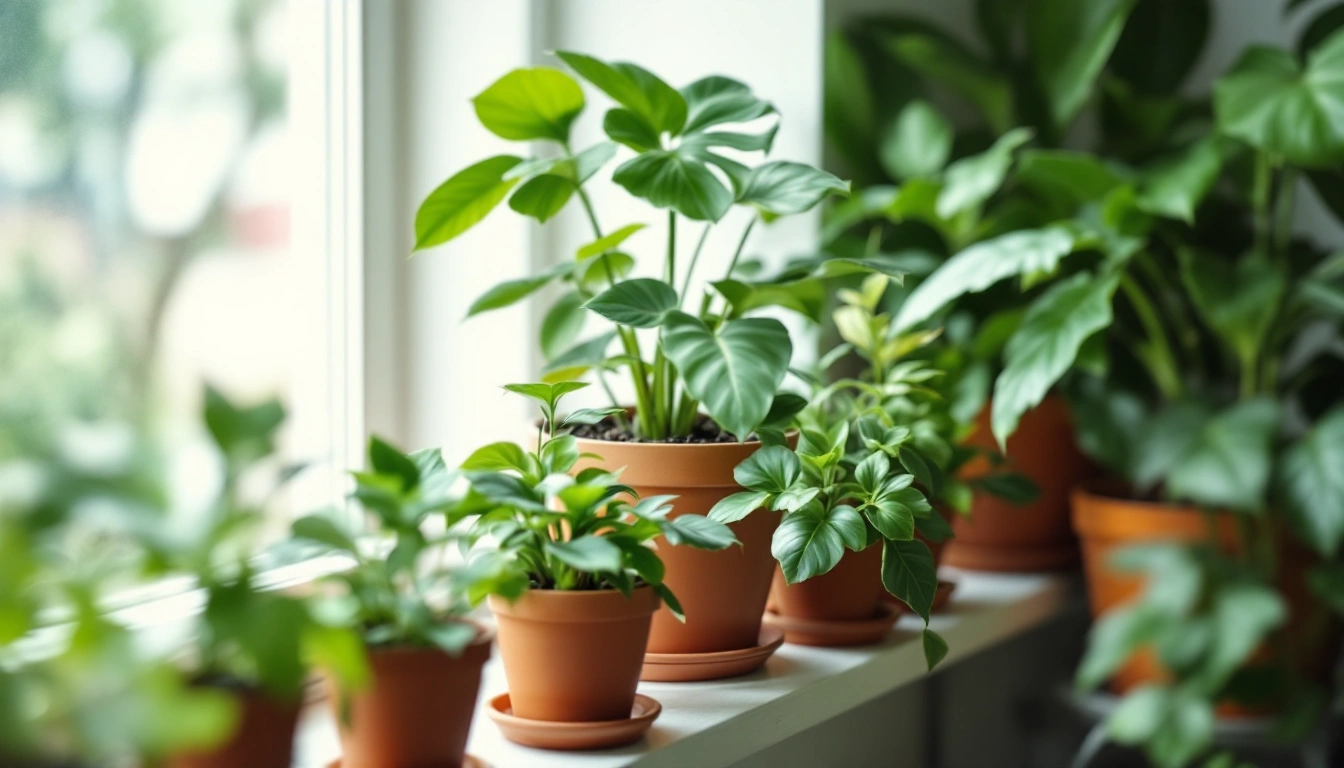
A bag of general-purpose potting mix is a reasonable base for most easygoing foliage houseplants without further amending.
Succulent and cactus mix
- Succulents and true desert cacti need a fast-draining mix that dries out completely between waterings. These mixes lean heavily on mineral content - commonly 30 to 50 percent perlite, pumice, or coarse sand - cut with a smaller amount of organic material. Using a general-purpose mix for these plants without amending it is one of the more common causes of root rot in succulents, since the extra moisture retention works against what the plant is adapted to.
Moisture-loving foliage plants
- Some indoor plants, including many ferns and certain tropical foliage species, come from consistently moist forest-floor environments and don't want the soil drying out fully between waterings. For these, a mix with more organic material and less added perlite than a general-purpose blend helps maintain steadier moisture. Peat- or coir-heavy mixes with only a small amount of mineral content tend to suit this group.
Chunky mixes for aroids and epiphytic plants
- Plants like many aroids (monstera, philodendron varieties grown for larger leaves, and similar climbers) and orchids often grow as epiphytes in the wild, meaning their roots are adapted to open air and quick-draining conditions rather than dense soil. For these, growers often use a chunkier mix built from bark, perlite, and sometimes horticultural charcoal, which allows more airflow around the roots than a standard fine-textured potting mix. This kind of mix looks and feels noticeably different from a typical bag of potting soil, with visible pieces of bark and coarse material throughout.
Seed-starting and propagation mixes
- Starting new plants from seed or rooting cuttings calls for a different profile again - usually a finer, lighter mix with good moisture retention and minimal nutrients, since overly rich soil can encourage fungal issues in young seedlings. Some growers use straight perlite or vermiculite for propagating cuttings before moving the rooted plant into a standard mix.
Matching mix to plant: a quick reference
| Plant type | Mix character | Key ingredient emphasis |
|---|---|---|
| General foliage houseplants | Balanced, moderate drainage | Organic base + moderate perlite |
| Succulents and desert cacti | Fast, complete drainage | Heavy perlite, pumice, or sand |
| Ferns and moisture-loving plants | Steady moisture retention | More organic material, less perlite |
| Aroids and epiphytic plants | Airy, chunky, open structure | Bark, perlite, sometimes charcoal |
| Seedlings and cuttings | Light, fine, low-nutrient | Fine peat/coir or straight perlite/vermiculite |
Scroll for more →
Amending instead of buying separately for every plant
- Buying a specialty bag for every category of plant isn't the only option. Many growers keep one general-purpose potting mix on hand and amend it as needed - adding extra perlite for succulents, extra bark for aroids, or extra organic material for moisture-loving plants. This is often more economical than stocking several specialty bags, especially for a smaller collection.
The pot matters as much as the mix
- Whichever mix you choose, a pot with a drainage hole makes a bigger practical difference than most people expect. Even a well-formulated mix stays waterlogged in a pot with nowhere for excess water to go, while a slightly imperfect mix in a well-draining pot often still performs fine. If you're setting up pots for a new plant, checking drainage on the container is just as important as picking the right soil.
Refreshing potting mix over time
- Most potting mixes break down gradually as the organic portion decomposes under regular watering, typically losing some of their original drainage and structure within one to two years. Repotting into fresh mix on that rough schedule - sooner if the current mix seems to stay wet for unusually long stretches, or if roots look crowded - keeps plants in better condition than continuing to water into an old, compacted mix indefinitely.
Why plant origin is the best predictor of mix needs
- Rather than memorizing a mix type for every individual houseplant, it helps to think about the environment a plant evolved in. Desert and semi-arid plants - succulents, most cacti, and some drought-tolerant foliage plants - developed roots suited to infrequent, thorough watering followed by a long dry spell, which is why they suffer in soil that holds too much moisture. Tropical forest-floor plants developed in the opposite direction, with roots adapted to steady, near-constant moisture and organic-rich soil built up from fallen leaf litter, which is why they can stress and wilt if their mix dries out completely. Epiphytic plants - many aroids, orchids, and bromeliads - often don't grow rooted in ground soil at all in the wild, instead clinging to tree bark or collecting in the crooks of branches, which is why they want an open, chunky mix that mimics that airy, well-ventilated rooting environment rather than dense potting soil.
Nutrient content differences between mix types
- Beyond drainage and moisture behavior, potting mixes vary in how much nutrition they provide out of the bag. Many general-purpose mixes include a starter charge of fertilizer that feeds a plant for several weeks after potting, after which regular feeding during the growing season becomes necessary since the core ingredients - peat, coir, bark, and perlite - don't replenish nutrients as they break down. Mixes built around a larger proportion of compost or aged organic matter typically start with more nutrition than lean, mineral-heavy succulent mixes, which are often nearly nutrient-free by design since the goal is drainage, not fertility.
Building a mix from base ingredients
For growers who prefer to mix their own rather than buy several specialty bags, keeping a few base ingredients on hand covers most of the categories above:
A peat- or coco-coir-based potting soil as the organic foundation for most mixes.
Perlite for drainage and aeration, adjusted up or down by plant type.
Bark chips for chunkier mixes suited to aroids and epiphytic plants.
Compost or worm castings for extra nutrients in mixes for heavier-feeding plants.
Coarse sand or pumice as an alternative or supplement to perlite for succulents and cacti.
Mixing custom batches from these components, adjusting ratios plant by plant, is often more economical over time than buying a different specialty bag for every category of houseplant, especially for anyone with a sizable or growing collection.
Testing a mix before committing a plant
- If you're unsure whether a mix suits a particular plant, a simple test helps: water a test batch of the mix in an empty pot and observe how quickly it drains and how long the surface stays visibly moist afterward. Comparing that behavior against what the plant is known to prefer - fast, thorough drying for a succulent, or steady, lingering moisture for a fern - gives a reasonably reliable read on fit before committing an actual plant to that mix.
Signs a mix mismatch is affecting a plant
- A mix that's too moisture-retentive for a given plant often shows up as yellowing lower leaves, soft or mushy stem tissue, a sour or musty smell from the soil, or fungus gnats hovering around the pot, since these small flies are drawn to consistently damp soil surfaces. A mix that's too fast-draining for a plant that wants more moisture often shows up as crispy leaf edges, wilting between waterings that resolves quickly once watered, or a plant that seems to need watering far more often than seems reasonable for its size and pot. Neither symptom set is exclusive to a mix problem - pests, light, and watering habits can cause similar signs - but a mismatched mix is worth ruling out when a plant struggles despite otherwise reasonable care.
Adjusting an existing mix instead of starting over
- If a plant is in a mix that seems slightly off but not drastically wrong, a full repot isn't always necessary. For a mix that's a bit too dense, top-dressing with a thin layer of coarse material and being more careful about watering frequency can bridge the gap until the next scheduled repot. For a mix that dries out a bit too fast, watering slightly more often and monitoring the plant's response can be a reasonable stopgap. A full repot into a properly matched mix remains the more thorough fix, but these adjustments can help in the meantime.
Humidity, temperature, and mix interaction
- Room humidity and temperature also affect how fast potting mix dries. The same mix may dry in two days in a warm summer room but stay damp for nearly a week in a cool winter room. Check the pot instead of watering on a fixed schedule.
Container choice alongside mix selection
- The mix does a lot of the work in managing moisture, but the container plays a significant supporting role. A pot without a drainage hole makes it hard for even a well-formulated mix to avoid staying waterlogged at the bottom, since excess water simply has nowhere to go. Unglazed terracotta pots add a small amount of additional drying through the porous walls themselves, which can be a useful pairing for moisture-sensitive plants like succulents, while glazed ceramic or plastic pots retain moisture longer, which can suit plants that prefer more consistent dampness. Pot size matters too - a container that's much larger than the plant's root ball holds more soil volume than the roots can use, which can mean the center of the mix stays wet longer than expected even with a well-draining formula.
Fertilizing on top of the right mix
- Getting the mix right handles drainage and aeration, but most potting mixes eventually need supplemental feeding regardless of type, since the nutrients present at potting time get used up or wash out with regular watering over weeks and months. Fast-draining, mineral-heavy succulent mixes tend to need this supplemental feeding sooner than richer, compost-heavy mixes, simply because there's less built-in nutrition to begin with and water passes through faster, carrying dissolved nutrients with it. Matching a feeding schedule to the mix type, not just the plant type, helps avoid a plant that looks like it's struggling with light or watering when the actual issue is a nutrient-depleted mix.
Repotting frequency across categories
- How often a plant needs repotting into fresh mix varies by category as well as by how fast that particular plant grows. Fast-growing tropical foliage plants in moisture-retentive mixes often need repotting every one to two years as roots fill the pot and the organic material breaks down and compacts. Slower-growing succulents and cacti can often go two to three years or longer between repottings, partly because they grow more slowly and partly because their leaner, more mineral mix resists compaction longer than organic-heavy blends. Epiphytic plants in chunky bark mixes sometimes need refreshing sooner than expected, not because the plant has outgrown the pot, but because bark itself breaks down and loses its airy structure faster than a mineral-heavy mix does.
Combining categories for mixed plant collections
- Most indoor plant collections include a mix of categories rather than just one type of plant, which raises the practical question of how to manage soil for a varied windowsill or plant shelf efficiently. A workable approach is to keep one general-purpose bag on hand for the easygoing majority of plants, plus a bag of perlite for amending toward the succulent end and a bag of compost or a moisture-retentive amendment for the fern end, rather than stocking a full specialty bag for every single plant category represented in the collection. This keeps the setup manageable without meaningfully compromising on giving each plant category what it needs.
Related reading
- For a closer look at building or buying a general mix, see pot soil mix. For specific plant-by-plant guidance beyond this overview, see potting mix for plants. For more on the mineral component that shows up across nearly every category above, see the perlite overview.
FAQ
Can I use one all-purpose potting mix for every houseplant?
You can, and it will work reasonably well for a lot of common houseplants, but it won't be ideal for plants at either extreme. Succulents will likely stay too wet in a straight all-purpose mix, and some tropical foliage plants may dry out faster than they'd like. Amending an all-purpose mix in either direction for specific plants gets better results.
How do I know which category my plant falls into?
A quick way to check is to look at the plant's natural habitat. Desert-origin plants like succulents and true cacti want fast drainage. Tropical forest-floor plants often want more moisture retention. Epiphytic plants that grow on trees in the wild, like many aroids and orchids, usually want a chunky, airy mix rather than a dense one.
Do I need different pots as well as different soil?
The pot matters alongside the mix. A pot without a drainage hole makes it much harder for any potting mix to do its job, since excess water has nowhere to go. Whatever mix you choose, a pot with a drainage hole (or a way to remove excess water) makes it far more forgiving.
How often should I refresh the potting mix in my houseplants?
Most potting mixes compact and lose some drainage ability over one to two years of regular watering as the organic portion breaks down. Repotting into fresh mix on that general timeline, or sooner if the current mix seems to stay wet for unusually long periods, keeps roots healthier over time.