
Potting & Soil Mixes
Full-Spectrum LED Grow Lights: How to Choose
The short answer
A useful full-spectrum LED grow light puts enough red and blue light on the plant canopy for steady growth without relying on window light alone. Compare fixtures by photosynthetically active radiation at plant height, not lumens, Run seedling fixtures 14 to 16 hours a day on a timer; for houseplants, keep it under 16 hours and match the species' day length, and raise the lamp as plants grow.
Last updated November 2026
| What to measure | Photosynthetically active radiation at the canopy (often reported as PPFD), not lux or lumens |
|---|---|
| What plants use most | Blue and red wavelengths drive photosynthesis; human eyes weight green brightest |
| Seedling fixture height | Keep fluorescent or LED fixtures about 2 to 6 inches above plants; adjust with chain or cord as growth continues |
| Daily run time | 14 to 16 hours on a timer for seedlings; do not keep lamps on more than 16 hours a day |
| Light type to skip alone | Incandescent bulbs give more heat than useful plant light and do not produce good transplants by themselves |
Scroll for more →
What's covered7
Indoor plants need more than a sunny window for steady growth. This guide shows how to pick and place a full-spectrum LED grow light for pots and seed trays.
- For potted seedlings, choose a broad-spectrum LED grow light and judge it by photosynthetically active radiation at the plant canopy, not lux or lumens. Run it 14 to 16 hours a day on a timer and keep the fixture close enough to prevent stretched, leaning stems. For houseplants, keep it under 16 hours and match the species' day length.
What full spectrum means on a grow-light label
"Full spectrum" tells you the fixture mixes wavelengths across visible light, often so the beam looks white to human eyes. It is not a single regulated test score. Two white LEDs can distribute energy differently across blue, green, and red bands.
Plants use light mainly in the red and blue parts of the spectrum for photosynthesis, even though our eyes are most sensitive to yellow-green light. Maryland Extension's seed-starting guide (updated August 14, 2026) notes that broad-spectrum LED grow lights that mimic daylight, or cool-white fluorescent tubes near 6500K, are common choices for indoor transplants. Fixtures labeled as grow lights often balance warmer red and cooler blue output to support thicker stems than cool-white tubes alone.
PAR, PPFD, lux, and lumens
Photosynthetically active radiation (PAR) is the slice of light between about 400 and 700 nanometers that plants can use for photosynthesis. It is a range, not a brightness number printed on the box.
Photosynthetic photon flux density (PPFD) describes how many photons in that range reach a square meter each second, usually in micromoles per square meter per second. Fixture labels sometimes list PPFD at a fixed hanging height. That number matters because it is measured at the plant, not at the lamp housing.
Lux and lumens describe brightness the way people see it. The University of Maryland's grow-light resource for seed starting (updated February 20, 2023) defines lumens as intensity across the visual spectrum we perceive. eXtension's LED grow-light guidance states that lumens correlate with human brightness but tell little about what plants use, so they are a weak way to compare plant fixtures.
If the manufacturer does not publish PPFD, adjust lamp height and watch the plants. Short, sturdy seedlings with normal leaf color usually mean enough light. Tall, leaning stems mean the canopy needs more intensity or a closer lamp.
How to choose a full-spectrum LED fixture
Match the fixture to the job. Seed starting in cell packs needs brighter, close light. A mature foliage houseplant may need less, depending on species and window access.
Pick a broad-spectrum LED or fluorescent grow light. Skip incandescent bulbs as the only source. Maryland Extension reports that incandescent bulbs shed more heat than useful plant light and do not produce good transplants by themselves.
Prefer fixtures you can raise and lower. Seedlings grow quickly. Chain, S-hooks, or an adjustable stand let you keep the correct gap as leaves rise toward the lamp.
Use a grounded outlet timer. A consistent photoperiod beats switching lights on by hand. Aim for 14 to 16 hours on for seedlings, following Maryland Extension's vegetable seed-starting guidance from 2026.
Read plant-light specs when available. If PPFD or PAR maps are listed, compare them at the height you plan to use. When they are absent, set the lamp at the low end of the recommended gap and move closer only if stems still stretch.
Plan for heat and airflow. LEDs run cooler than older high-intensity discharge lamps, but any fixture warms the air nearby. Leave space for ventilation if the room already runs warm.
Set height, photoperiod, and daily checks
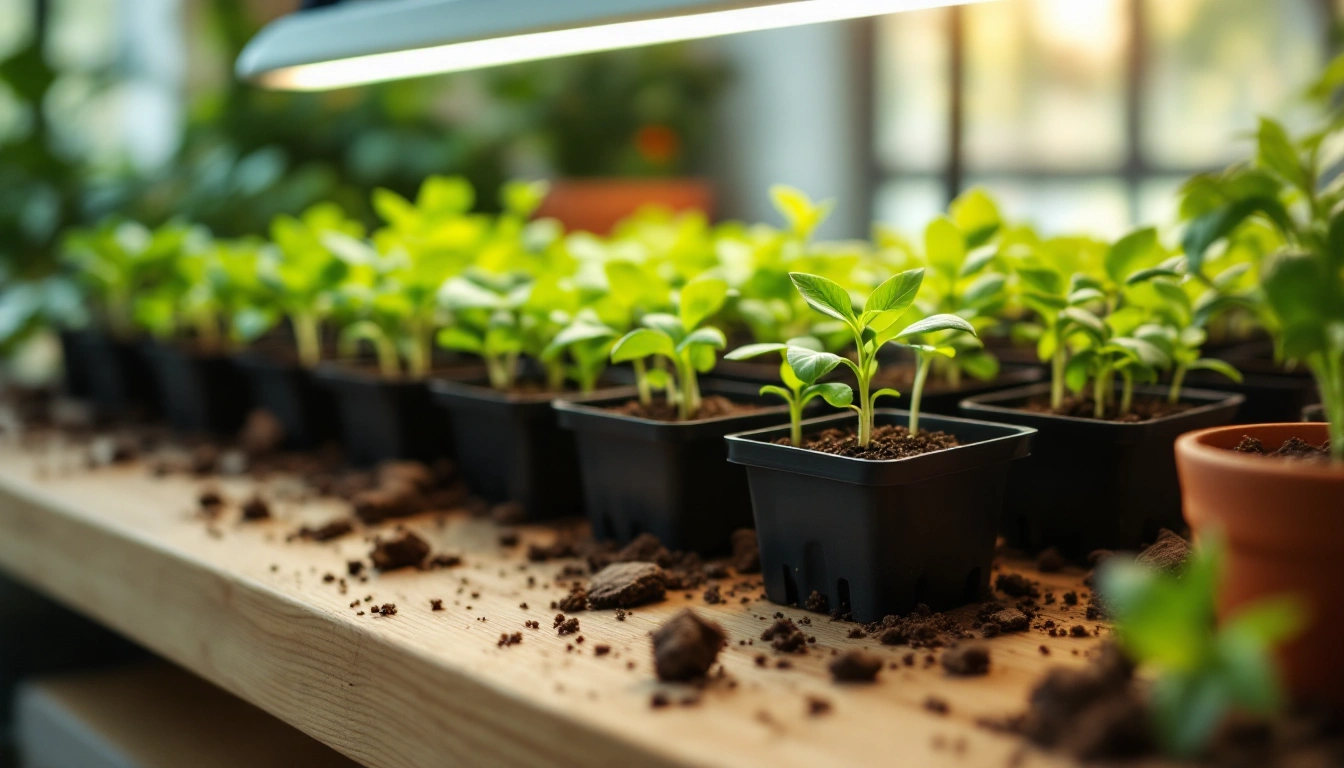
Maryland Extension advises keeping fluorescent or LED fixtures about 2 to 6 inches above seedlings and leaving them on 14 to 16 hours daily with a timer. Tomato and cabbage family seedlings are especially prone to stretching toward a weak light source, so check height every few days during a growth spurt.
The same university's low-light houseplant resource (updated March 13, 2023) adds that plants need some dark period and should not receive more than 16 hours of light in a day. Flowering houseplants such as poinsettia, kalanchoe, and Christmas cactus respond to shorter days, but standard seedling benches follow the longer run time.
Signs you need change:
| What you see | Likely cause | What to adjust |
|---|---|---|
| Long thin stems leaning one way | Too little light or fixture too high | Lower the lamp or add a second fixture |
| Pale new growth on a sun-loving crop | Still too dim | Shorten the gap or extend the run time slightly within the 16-hour cap |
| Crisp leaf edges or bleached spots | Light too strong or too close | Raise the fixture and watch new leaves |
| Mix stays wet for days | Drainage or watering issue, not light alone | Review pot, mix, and drain hole before adding more light |
Scroll for more →
LED versus fluorescent for home growers
Fluorescent shop-light fixtures with T-8 tubes remain a low-cost route for salad greens and vegetable transplants, according to Maryland Extension's 2023 grow-light comparison. T-5 tubes can support faster growth but cost more and need matching fixtures.
LEDs often use less electricity and produce less heat, which eXtension's LED guidance says can let you hang lamps nearer seedlings without as much heat stress. That does not mean every LED outperforms every fluorescent tube on photosynthetic output, because power and diode mixes vary.
Full-spectrum fluorescent tubes marketed as grow lights combine warm and cool output for thicker stems and flowering indoors, while basic cool-white tubes still work for many leafy transplants. LED products may mix warm-white and cool-white diodes in one bar to reach a similar balance.
Pair the light with the right pot and mix
Supplemental light supports growth only when roots sit in a suitable mix. The succulent potting mix guide covers how drainage and moisture retention change with ingredients such as perlite, coir, and peat.
Houseplants in containers span a wide range of water needs. The guide to potting mix for indoor plants separates fast-draining succulent blends from moisture-retentive tropical mixes. Give seedlings a light, sterile soilless mix rather than dense garden soil that can drown small roots in shallow trays, as Maryland Extension warns in its 2026 seed-starting article.
Perlite or vermiculite in a seed blend keeps the surface airy while the lamp runs. A self-watering pot and a grow light are not a substitute for each other: one manages water storage, the other replaces the sun the canopy would have received outdoors.
Bottom line
- A full-spectrum LED grow light earns its place when you measure success at the plant canopy, run a steady 14- to 16-hour photoperiod, and keep the fixture close enough that stems stay stocky. Lumens and lux describe human brightness, not plant fuel, so use PAR or PPFD data when you have it and plant posture when you do not. Match the lamp with the right container mix and drainage for the crop you are growing indoors.
FAQ
Does full spectrum on the label guarantee a good grow light?
No. Full spectrum is a marketing phrase for a broad blend of wavelengths, not a standard test. A white-looking LED can still be short on the red and blue bands plants use most. Read the fixture's plant-light specs if listed, watch how seedlings respond, and raise or lower the lamp before trusting the label alone.
Can I use a lux meter or phone app to set grow-light intensity?
Lux and lumens track light the way human eyes see brightness, which weights green heavily. Plants photosynthesize across a different band than our eyes prioritize. Extension guides note that lumens are a poor way to compare fixtures for plant growth; use the maker's PAR or PPFD data when available, or adjust height until stems stay short and leaves look normal.
Are LED grow lights better than fluorescent shop lights?
LEDs usually use less electricity and run cooler, so you can often hang them closer without overheating seedlings. Fluorescent shop lights remain an inexpensive option for stocky vegetable transplants and salad greens. Neither type wins on every label; match the fixture to the crop and watch for stretching or heat stress.
How many hours should a grow light run each day?
Maryland Extension recommends running fluorescent or LED seedling fixtures 14 to 16 hours per day on a timer. The same resource family warns against more than 16 hours of light daily because plants need a dark period to develop properly. Flowering schedules for some houseplants depend on shorter days, but most seed-starting setups stay on that 14- to 16-hour range.
Do indoor plants in pots need the same light as vegetable seedlings?
Seedlings usually need brighter, closer light to stay stocky. Mature houseplants may get by with a bright window or a lower-intensity supplement, depending on species. Low light still produces thin, reaching growth on many indoor plants, which is a sign to move the pot nearer the lamp or add a fixture rather than guessing from how bright the room looks.
What potting setup works with supplemental light?
Light does not fix soggy mix. Seedlings and houseplants still need drainage, appropriate mix texture, and a pot with a working drain hole. A fast-draining blend for succulents and a moisture-retentive blend for tropical foliage need different watering even under the same lamp. Pair the light plan with the mix the roots actually live in.