
Potting & Soil Mixes
Pest-Deterrent Companion Plants for Pots
The short answer
Pest-deterrent companion plants work best when you tuck odor-heavy herbs and flowers between the pots you want to protect, match each plant to a pest group that research has tied to that pair, and add trap crops when you need pests to leave a main crop alone.
Last updated November 2026
| Repellent role | Herbs and alliums with strong volatiles may mask host scents or make it harder for pests to find crops (University of Maryland Extension, July 2026). |
|---|---|
| Trap-crop role | Sacrificial plants such as nasturtium or early radishes draw insects away from the crop you plan to harvest (University of Minnesota Extension, reviewed 2026). |
| Container fit | Use their own pots or a shared long planter so roots and water needs stay separate from heavy feeders. |
| What not to expect | Marigolds are not a reliable fix for Colorado potato beetles, and many online repellent lists lack research support (University of Minnesota Extension, reviewed 2026). |
Scroll for more →
What's covered7
For container vegetables, pest-deterrent companions work when you place odor-heavy herbs and flowers near the crops you want to protect, use trap crops where research supports them, and keep each plant in its own pot when water needs differ.
How pest-deterrent companions work in pots
Insects often locate crops by smell or sight. University of Minnesota Extension (reviewed 2026) groups companion effects into three paths: odors that repel pests, scents that hide the host, and plantings that attract predators or pull pests elsewhere.
In a container garden you rarely have field-wide borders. You still copy the same idea on a smaller scale:
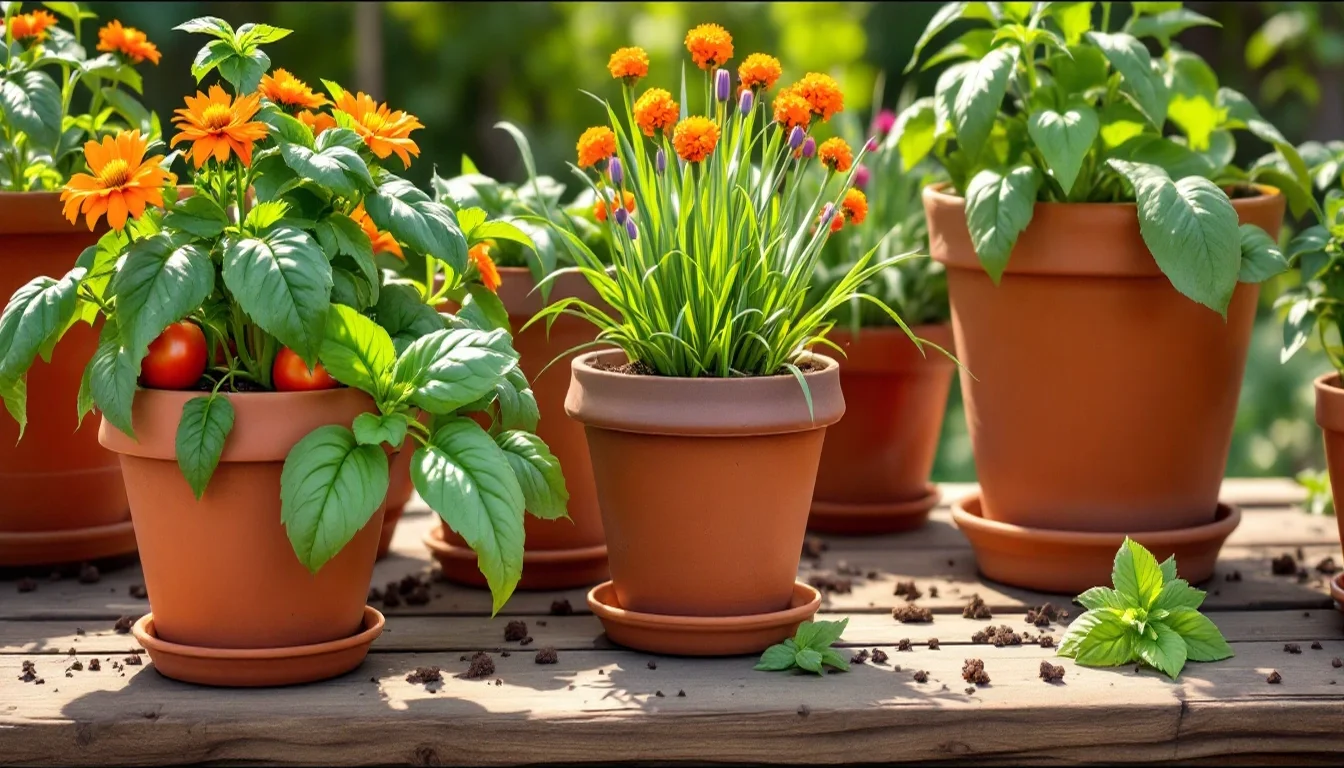
- Place repellent herbs in gaps between tomato, pepper, or squash pots on a deck or railing planter.
- Add one trap-crop pot that you inspect more often than the main crop.
- Let a few herbs flower so syrphid flies and other aphid predators have nectar and pollen nearby (University of Minnesota Extension, reviewed 2026).
University of Maryland Extension (updated July 2026) describes the same planting patterns in beds: alternate basil and tomato along a row, alternate pepper and onion rows, or mix species throughout a plot. On a patio, use individual pots or a long self-watering planter with clear spacing so each root system keeps its own drainage.
A narrow balcony still works if you think in layers. Tall crop pots go at the back rail. Trap-crop nasturtiums sit in front where you can see insect pressure. Low chive or thyme pots fill gaps along the front edge so volatile oils sit near the soil line where flea beetles travel.
Repellent and masking plants gardeners use most
University extension summaries back the pairings below. Charts from retailers or blogs are not included.
| Plant | Common container pairing | What extension guides report |
|---|---|---|
| Basil | Tomatoes, peppers | Maryland Extension (July 2026) cites basil volatiles among herbs that repel aphids or mask host odors; Minnesota Extension (reviewed 2026) cites studies where basil and marigolds reduced thrips on tomatoes. |
| Marigolds (African or French) | Tomatoes, squash, beans | Maryland Extension (July 2026) ties both Tagetes types to soil nematodes; Minnesota Extension (reviewed 2026) notes mixed results on general insect warding and warns marigolds do not reliably stop Colorado potato beetles. |
| Chives and other alliums | Carrots, brassicas in pots | Maryland Extension (July 2026) groups alliums with aromatic herbs as aphid repellents; an Iowa study reported by Minnesota Extension (reviewed 2026) lists onion with thyme and nasturtium for fewer cabbageworms on broccoli and cabbage. |
| Thyme and rosemary | Cabbage family in planters | Maryland Extension (July 2026) lists thyme and nasturtium for less caterpillar damage on broccoli. |
Scroll for more →
Trap crops for potted gardens
Trap crops are sacrificial plants that pests reach first. Minnesota Extension (reviewed 2026) documents several pairs:
| Trap plant | Draws pests away from | Notes for pots |
|---|---|---|
| Nasturtium | Squash, pumpkins, brassicas | Research cited by Minnesota shows lower squash bug pressure near nasturtium; scout the trap pot and remove heavily infested leaves because the plant can also host aphids. |
| Radish | Flea beetles on young brassicas | Field plantings use radish before the main crop (University of Minnesota Extension flea-beetle guidance, reviewed 2022). For adjacent pots, this page suggests starting radish one to two weeks ahead of the crop you plan to harvest. |
| Blue Hubbard squash | Cucumber beetles, squash bugs | Minnesota Extension (reviewed 2026) notes blue hubbard squash attracts these pests away from other cucurbits; manage the trap plant so insects do not spill back into the main crop. |
Scroll for more →
Squash and pumpkins depend on insect pollination. Minnesota Extension (reviewed 2026) notes that steady flowers through the season can support bumblebees and other pollinators in the garden.
Herbs that do double duty in the kitchen
Basil, chives, thyme, and rosemary earn their pot space because you can harvest them while they act as companions. University of Maryland Extension (July 2026) lists volatile organic compounds from alliums, basil, rosemary, lavender, dill, cilantro, and chives as repellents that may repel aphids or make it more difficult for them to locate host plants. Keep garlic and onion in their own pots beside carrots or greens rather than in the same soil as a tomato.
Set up companions in containers step by step
- Start with healthy crop pots. Use loose potting mix for plants sized to each vegetable, with drain holes and full sun for fruiting crops.
- Choose one pest goal per grouping. Example: thrips and aphids on patio tomatoes, or squash bugs on zucchini in a half-barrel.
- Add side pots for repellent herbs. Give each herb its own pot beside the crop so roots and water do not mix with the main vegetable.
- Sow trap crops earlier when needed. For containers, this page suggests starting nasturtium or radish in adjacent pots one to two weeks before transplanting squash or brassicas. In field plantings, University of Minnesota Extension flea-beetle guidance (reviewed 2022) calls for trap crops about 7 to 14 days before the main crop.
- Water on separate schedules. Herbs in small pots dry out faster than a large tomato tub. Water each container on its own schedule.
- Scout both crop and trap weekly. Remove heavily infested trap-crop leaves so pests do not spread to the main pot.
Research limits worth knowing
University of Minnesota Extension (reviewed 2026) warns that many internet companion charts are not backed by trials. When flea beetles threaten young seedlings, University of Minnesota Extension flea-beetle guidance (reviewed 2022) allows row covers until flowers need pollinators.
Tie companions to your soil and compost plan
Companion plants do not fix dense, waterlogged mix. Vegetables in pots still need the drainage and feeding plan in the main succulent potting mix guide and in potting soil for vegetables. Finished compost from a compost tumbler can top-dress crop pots while herbs stay on lighter mix.
FAQ
Do marigolds repel every vegetable pest?
No. University of Minnesota Extension (reviewed 2026) notes marigolds only sometimes ward off insects. Maryland Extension (July 2026) ties African and French types to soil nematodes in research summaries, but marigolds are not a reliable Colorado potato beetle deterrent.
Which companion plants belong in separate pots?
Basil, chives, thyme, and marigolds in small side pots can sit close enough to mask odors between crop pots on a patio or balcony. Give each herb or allium its own container when you need separate watering from a large tomato or pepper tub.
How do trap crops differ from repellent plants?
Repellent plants aim to make pests avoid the area or fail to find the host. Trap crops are meant to be more attractive, so pests feed there first.
Can garlic and onions sit next to beans in pots?
Maryland Extension intercropping photos show peppers with basil. If you grow peas or beans in pots, place garlic and onions in neighboring pots with space for both root systems rather than one overcrowded tub.
Should I crush herb leaves every morning?
Crushing leaves releases more volatile oils, which is why many gardeners do it, but extension guides focus on planting placement and flower resources for beneficial insects rather than daily leaf damage. Rub or snip a few leaves only if you are already harvesting for the kitchen.
Do companion plants replace clean pots and good soil?
No. They add another layer on top of drainage, fresh potting mix, and scouting. University of Maryland Extension (July 2026) still treats succession planting as a core tool. It calls crop rotation only marginally helpful for insect and disease pressure in home gardens. Pair companion plants with the right potting soil for vegetables and regular checks for aphids or beetles.