
Potting & Soil Mixes
Compost Tumblers and Bins for Home Gardeners
The short answer
A compost tumbler is a closed drum on a stand or axle that you turn to mix and aerate food and yard waste, giving you finished compost in a smaller footprint than an open pile while keeping the batch contained.
Last updated November 2026
| Tumbler role | Mixes browns and greens inside a closed drum you rotate by hand |
|---|---|
| Browns:greens | At least two to three parts dry browns by volume for every part of wet greens (EPA) |
| Carbon:nitrogen | About 30 parts carbon to 1 part nitrogen for active microbes (UMaine) |
| Moisture | Like a wrung-out sponge; add water or dry browns if soggy or dusty (EPA) |
| Ready in | Often ready in about three to five months; unattended piles may take a year (EPA) |
Scroll for more →
What's covered10
- What a compost tumbler is
- Tumbler, bin, pile, or worm box
- Horizontal barrel and two-bin designs
- What to add and what to leave out
- Steps to run a compost tumbler
- Stationary bins and simple DIY options
- Worm bins when scraps never stop
- How much space tumblers save
- Using finished compost with container mixes
- Picking a setup for your yard
Compost tumblers mix kitchen and yard waste inside a sealed drum you rotate by hand. They take less ground space than a hot compost pile and break down scraps faster when you balance dry browns with wet greens and turn the drum often. A static bin or a worm box can do the same job in other small yards.
This guide compares tumblers, bins, and worm composting for home use. It also shows how finished compost fits into container mixes such as the guides on succulent potting mix.
What a compost tumbler is
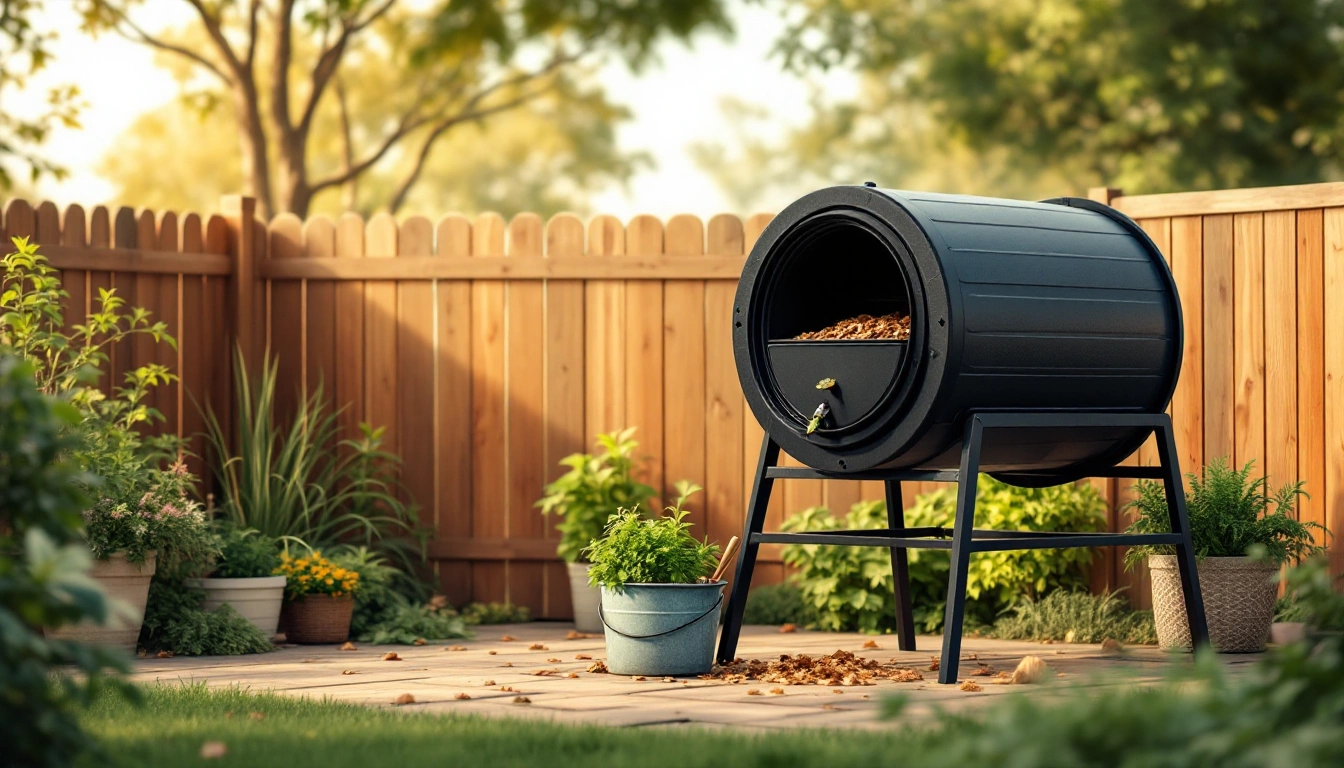
A compost tumbler is a closed container, usually a horizontal barrel, mounted on a stand or central axle. You load it with chopped food scraps and dry yard material, then spin or crank it to blend the batch and pull in air.
The U.S. Environmental Protection Agency lists enclosed barrels and tumblers beside wire, wood, and block bins as backyard compost structures. That sealed shape keeps the pile in one spot, sheds excess rain, and blocks most animals when the lid fits tight.
Tumbler, bin, pile, or worm box
| Method | Space | How you aerate | Best for |
|---|---|---|---|
| Compost tumbler | One barrel on a stand | Rotate the drum | Kitchen and yard waste in a small yard |
| Stationary bin | One fenced box | Fork edges to center | Steady yard trim when you can turn by hand |
| Open pile | Largest footprint | Fork the pile | Large gardens with room and drainage |
| Worm bin | Small tub indoors or on a porch | Worms move through bedding | Mostly kitchen scraps, little yard waste |
Scroll for more →
The EPA describes vermicomposting as compact, inexpensive, and workable indoors or out when the bin stays covered and properly fed.
Horizontal barrel and two-bin designs
Most home tumblers are horizontal barrels with a door on the side or end. Some mount on a base with rollers; others spin on a center rod. University of Maine Extension groups these barrel composters with turning units that mix wastes for aeration instead of fork-turning a pile.
Single-chamber tumblers hold one batch at a time. When the drum is nearly full, you stop adding fresh material until the contents finish and look like soil.
Two-bin tumblers split the drum into two bins. You fill one side while the other side cures. That layout suits kitchens that never stop producing scraps, without starting a second pile elsewhere.
What to add and what to leave out
The EPA groups compost inputs into browns (carbon-rich, dry) and greens (nitrogen-rich, moist).
Typical greens
- Fruit and vegetable scraps
- Grass clippings
- Coffee grounds with paper filters
- Paper tea bags without staples
- Crushed eggshells
Typical browns
- Dry leaves
- Small twigs and stalks
- Shredded cardboard without wax or tape
- Shredded non-glossy paper
When you add to any composter, cover fresh food scraps with dry browns four to eight inches deep (EPA).
Avoid meat, bones, dairy, oils, pet waste, diseased plants, and herbicide-treated clippings in a backyard system.
One practical mix is about two parts grass clippings to one part fallen leaves by volume, with full blending rather than strict layering (University of Maine Extension).
Steps to run a compost tumbler
- Chop scraps. Cut hard stalks, corn cobs, and thick stems into smaller pieces so they break down evenly. Smaller pieces decay faster in any composter.
- Load browns first, then greens. Start with bulky browns such as twigs or chips if your model allows, then alternate thin layers of greens and browns.
- Check moisture. Add water if the batch feels dry. Add dry leaves or shredded paper if wet or smelly.
- Turn after every addition. Spin the drum several rotations to mix fresh scraps through the batch.
- Watch heat and odor. A well-maintained backyard pile can reach 130 to 160 F (EPA). Sour smells usually mean too much green waste or too little air. Add browns and turn.
- Cure finished compost. When the texture is dark and crumbly and you no longer see food scraps, let the batch rest several weeks before use. The EPA suggests at least four weeks of curing after active heating stops.
- Screen and store. Sift out sticks and pits. Store finished compost in a lidded tub until you blend it into garden soil or a DIY potting soil recipe.
Stationary bins and simple DIY options
If you do not want a tumbler, a holding bin still works in a small yard. The EPA allows bins built from wire, wood, or cinder blocks, or purchased enclosed bins with tight lids.
Drop weeds, leaves, and food scraps into the bin as you collect them. Mix high-carbon and high-nitrogen layers, keep moisture in the damp-sponge range, and fork the pile when heat drops. University of Maine Extension advises against placing a bin close to the house, since it can attract rodents.
The same brown-to-green rules apply no matter which container you use.
Worm bins when scraps never stop
Worm composting needs a dark bin, moist bedding such as torn newspaper, and composting worms. The EPA lists red wriggler species as commonly used; outdoor garden worms are not interchangeable.
Keep the bin between about 59 and 77 F when possible. Feed chopped fruit and vegetable scraps, coffee grounds, and crushed eggshells while avoiding meat, dairy, citrus, and greasy foods.
How much space tumblers save
A typical horizontal tumbler occupies roughly the footprint of a large trash can plus clearance to spin the drum. University of Maine Extension notes that open piles smaller than three feet cubed struggle to hold heat, while piles larger than five feet cubed need enough air at the center.
Tumblers do not remove the need for dry browns. You still store bags of leaves or shredded paper nearby. They concentrate the active pile so small-space gardeners keep composting without dedicating a full corner of the yard.
Using finished compost with container mixes
Finished compost improves structure and holds nutrients in garden beds. For pots, use it as one ingredient, not the whole fill.
The EPA suggests mixing two to four inches of compost into the top six to nine inches of in-ground soil. For containers, use screened compost as one part of a blend described in guides such as potting soil for vegetables and succulent potting mix.
Let compost finish fully before adding it to indoor plant mixes. Immature compost can heat up, smell sharp, or harbor viable weed seeds.
Picking a setup for your yard
Match the tool to your waste stream and space.
- Choose a tumbler when you want quick mixing, a contained batch, and both kitchen and light yard waste in a tight garden.
- Choose a stationary bin when you have steady leaves and grass and do not mind fork-turning now and then.
- Choose a worm bin when you mostly cook at home, lack outdoor space, and can keep indoor temperatures steady.
- If you have no space to compost, the EPA suggests a municipal or community program that collects food scraps or takes them at a drop-off point.
FAQ
Do compost tumblers work faster than a compost pile?
Turning adds oxygen, which speeds decomposition compared with a pile you rarely fork. Speed still depends on the brown-to-green balance, moisture, and particle size. Tumblers help mainly by making regular mixing easy in a small space.
How often should you turn a compost tumbler?
Turn after you add fresh scraps so greens and browns blend. Turn again when heat drops or the batch starts to smell sour. If contents look soggy, add dry browns and turn. If nothing breaks down, add nitrogen-rich greens and check moisture.
What is the difference between a compost tumbler and a compost bin?
A tumbler is a drum you rotate to mix the whole batch without a fork. A stationary bin holds the pile in one place; you turn it by forking material from the edges to the center. Both keep waste contained compared with an open pile. The EPA lists barrels, tumblers, and bin structures made from wire, wood, or blocks as common backyard options.
Are compost tumblers or worm bins better for small spaces?
Both fit tight yards. Tumblers handle yard trim and most kitchen scraps when you balance browns and greens. Worm bins use less space and suit mostly kitchen waste, but the EPA notes they need a suitable worm species, steady bedding, and temperature roughly between 59 and 77 F for best results.
Can you use tumbler compost in potting mix?
Yes, once compost is dark, crumbly, and smells like soil, with no recognizable food scraps. For containers, screen out twigs and mix compost with other ingredients rather than filling a pot with compost alone.
Do you need two chambers in a compost tumbler?
Not always. A single drum works if you stop adding fresh material while one batch cures. A two-bin tumbler lets you fill one side while the other finishes, which is useful when you produce kitchen waste every week. University of Maine Extension describes barrel composters as one type of turning unit alongside multi-bin systems.