
Potting & Soil Mixes
Live Sphagnum Moss: What It Is and How to Use It
The short answer
Live sphagnum moss is a living, actively growing moss, sold fresh or lightly packed rather than dried, and it's different from both dried sphagnum moss and peat moss, which are processed and no longer alive.
Last updated September 2026
| State | Living, green, actively growing |
|---|---|
| Common uses | Terrariums, moss poles, orchid mounts, top-dressing |
| Light needs | Bright, indirect light to stay green |
| Moisture needs | Consistently damp, not soggy |
| Differs from | Dried/milled sphagnum and peat moss |
Scroll for more →
What's covered13
- What live sphagnum moss actually is
- Live sphagnum vs dried sphagnum vs peat moss
- Common uses for live sphagnum moss
- Keeping live sphagnum moss alive
- What happens if it dries out or dies
- Propagating and expanding live sphagnum
- Buying and storing live sphagnum moss
- Setting up a moss pole with live sphagnum
- Using live sphagnum with orchids
- Common problems and how to fix them
- Where live sphagnum moss is harvested
- Live sphagnum vs coco coir and other substrates
- Frequently asked questions
Your choice of live sphagnum moss affects water and air around the roots. Compare live sphagnum moss by drainage, water storage, and fit for the plant. Use this live sphagnum moss guide to see the main trade-offs.
- Live sphagnum moss is a living, actively growing moss, sold fresh rather than dried, and it's a different product from both dried sphagnum moss and peat moss. All three come from the same general family of moss, but they're processed differently and used for different purposes.
What live sphagnum moss actually is
Sphagnum is a genus of moss that grows in wet, boggy environments, often forming dense mats over standing water or saturated ground. Live sphagnum moss is this moss sold and shipped while still alive, typically as a loose, slightly damp clump of green and light tan strands. Given the right light and moisture, it continues to grow rather than sitting as inert plant material.
This is the key distinction from other sphagnum-derived products. Dried sphagnum moss is the same plant, but harvested and dried until it's no longer alive, used as a lightweight, absorbent lining or growing medium. Peat moss is different again: it's the older, decomposed layers of sphagnum and other bog plants that have built up and compressed over long periods underground, then harvested, dried, and sold as a soil amendment.
Live sphagnum vs dried sphagnum vs peat moss
Live sphagnum moss is alive, green, and growing. It's used where the living quality itself matters, such as terrarium landscaping, moss poles for climbing plants, or as a living mount for certain orchids.
Dried (or milled) sphagnum moss is the same species, but dead and dried, often sold loose or shredded. It's commonly used as a liner for hanging baskets, a top-dressing to help retain surface moisture, or a lightweight growing medium for orchids and carnivorous plants.
Peat moss is decomposed, ancient sphagnum and other bog material, harvested from peat bogs and sold compressed in bales or bags. It's a common soil amendment for moisture retention and acidity, but it has a denser, more broken-down texture than either live or dried sphagnum, and it isn't alive or capable of regrowing.
Common uses for live sphagnum moss
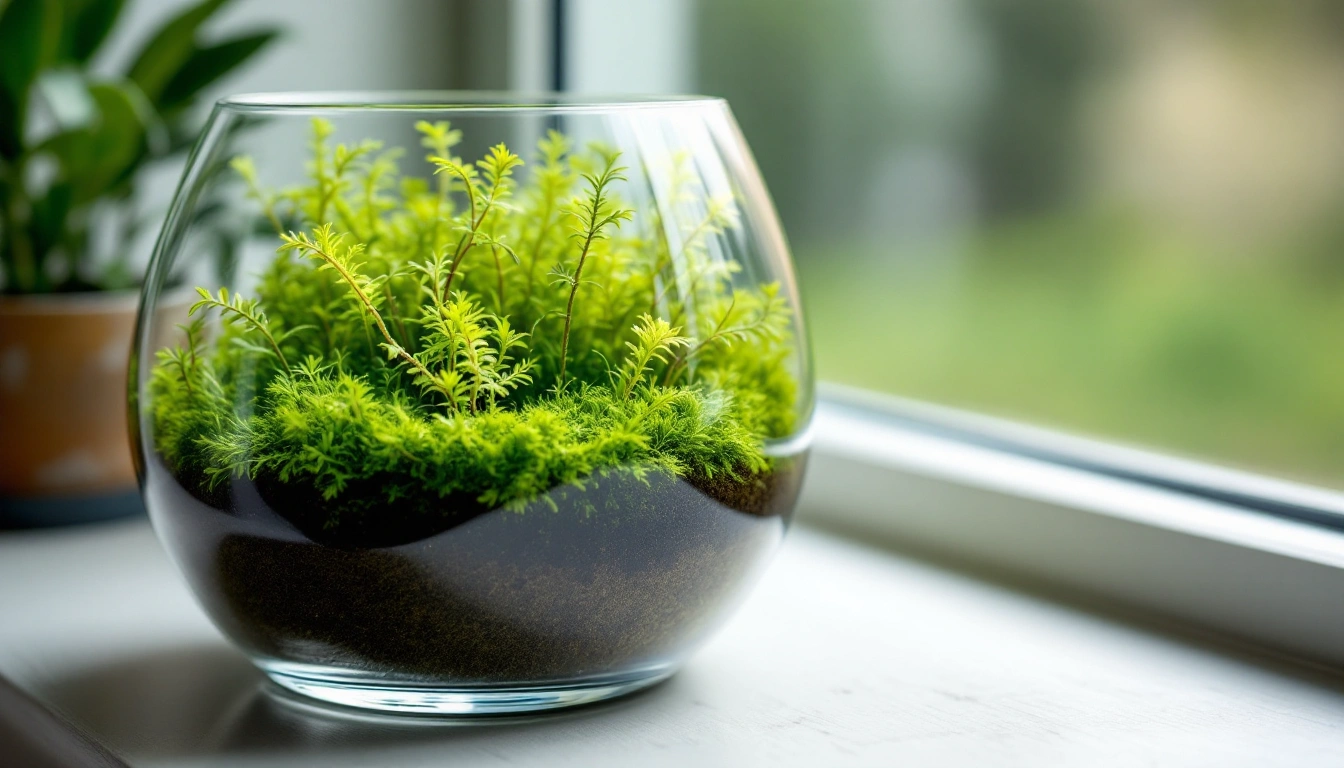
Terrariums. Live sphagnum adds a natural, green, textured ground cover and helps maintain the humid microclimate many terrarium plants need.
Moss poles. Wrapped around a support pole and kept moist, live sphagnum gives climbing aroids like monstera and philodendron a surface to root into as they grow upward, mimicking how they'd climb a tree in the wild.
Orchid mounts and baskets. Some orchids are mounted on bark or cork with a pad of live sphagnum around the roots to hold moisture while still allowing airflow.
Top-dressing. A layer of live sphagnum on the surface of a potted plant's soil can help retain surface moisture and add a decorative, natural look.
Keeping live sphagnum moss alive
- Live sphagnum needs a few consistent conditions to stay green and growing rather than browning and dying off.
Light. Bright, indirect light suits it well. Very low light will slow growth and can cause the moss to fade, while very intense direct sun can dry it out too fast.
Moisture. Consistent dampness is essential, though sphagnum shouldn't sit in standing, stagnant water for extended periods. A light misting or occasional watering to keep it moist but not waterlogged works well for most setups.
Water quality. Sphagnum is sensitive to mineral buildup and chlorine over time. Distilled, filtered, or rainwater is often recommended for regular use, though occasional tap water is unlikely to cause immediate harm.
Airflow. Some air movement helps prevent mold or algae buildup, particularly in closed terrarium environments.
What happens if it dries out or dies
If live sphagnum dries out completely or is kept in poor conditions for too long, it will turn brown and stop growing. Dead, browned sphagnum isn't necessarily wasted, since it functions much like dried sphagnum moss at that point, still useful as a lining or moisture-retentive material, just no longer alive or able to regrow.
Sphagnum can sometimes recover from a partially dried state if remoistened before it's fully dead, but a completely browned, brittle clump generally will not turn green again.
Propagating and expanding live sphagnum
- One advantage of live sphagnum over dried products is that it can be propagated. Small fragments, even individual strands, can regrow into new moss growth if kept consistently moist and given adequate light. This means a modest starter clump can be gradually expanded over time by spreading fragments across a moist surface and letting them fill in, which is a common way terrarium hobbyists build up ground cover.
Buying and storing live sphagnum moss
- Live sphagnum is typically sold in small, loosely packed bags or containers, kept slightly damp to preserve the living moss during shipping and storage. It shouldn't be sealed completely airtight for long periods, since trapped moisture without airflow can encourage mold. If you're not using it immediately, keep it in a cool spot with a bit of light and check periodically that it hasn't dried out or started to smell sour or moldy. A package of live sphagnum moss intended for terrarium or orchid use is worth choosing over dried sphagnum specifically when you want the moss to keep growing rather than just serve as inert filler.
Setting up a moss pole with live sphagnum
Building a moss pole with live sphagnum is a common project for climbing aroids that naturally grow up tree trunks in the wild. Start with a sturdy pole, often a length of PVC pipe, bamboo, or a coir-wrapped stake, positioned in the pot next to the plant. Take small handfuls of live sphagnum, dampen them, and press them around the pole, securing them in place with fishing line, garden twine, or thin wire wrapped in a spiral down the length of the pole. The goal is a fairly even, snug layer of moss all the way around, thick enough that aerial roots can push into it and find moisture.
Once built, the pole needs regular misting or watering to keep the moss damp, since a dry moss pole gives climbing roots nothing to hold onto or absorb. Many growers mist the pole every few days, more often in dry indoor air, and check that the moss stays green rather than browning and drying out over time.
Using live sphagnum with orchids
Orchids that prefer more moisture retention than a pure bark mix provides sometimes get a layer or pad of live sphagnum incorporated into their potting setup. This is especially common for orchids mounted on bark, cork, or wood, where a moisture-holding pad around the roots bridges the gap between the humidity the plant wants and the airflow a mount alone would provide. The moss is usually wrapped snugly around the root mass and secured with wire or fishing line, then misted or watered periodically to keep it consistently damp without staying soggy for extended periods, since some orchid roots are prone to rot in overly wet conditions.
Growers who pot orchids in sphagnum rather than mounting them tend to water less frequently than with a pure bark mix, since sphagnum holds considerably more moisture and stays damp much longer between waterings.
Common problems and how to fix them
Browning patches. Isolated brown patches within an otherwise healthy clump usually mean that section dried out or received too much direct light. Trim away the dead portion and keep the surrounding moss consistently moist; healthy fragments nearby can often fill in the gap over time.
Algae growth. A greenish film or slime on the surface, distinct from the moss itself, points to algae, usually caused by too much light combined with standing water or poor airflow. Reducing light intensity slightly and improving airflow around the moss usually resolves it.
Mold or a sour smell. This typically signals stagnant, poorly aerated moisture, often in an overly humid, sealed container. Increasing ventilation and avoiding waterlogging, rather than just misting more, generally helps.
Slow or no growth. Insufficient light is the most common cause. Moving the setup to a brighter spot with indirect light, without direct hot sun, usually kickstarts growth again.
Where live sphagnum moss is harvested
- Live sphagnum sold for horticultural use is typically harvested from wild or cultivated bog areas, primarily in regions with the cool, wet climate sphagnum needs to thrive, such as parts of New Zealand, Chile, and the northern United States. Because sphagnum bogs are slow-growing, sensitive ecosystems, sustainable harvesting practices matter, and some suppliers specifically market moss harvested through rotational or lower-impact methods. This is a separate consideration from peat moss harvesting, which draws from older, more deeply decomposed bog layers rather than the living moss growing near the surface.
Live sphagnum vs coco coir and other substrates
- For plants that need consistent humidity and moisture, live sphagnum is sometimes compared to coco coir or other moss-like substrates. Coco coir holds moisture well and is widely available, but it isn't alive and doesn't offer the same natural, green, textured surface that live sphagnum provides in a display terrarium or a visible moss pole. For purely functional moisture retention with no concern for appearance, coir is often the more practical and less finicky choice. For projects where the living, green surface matters as much as the moisture it holds, live sphagnum remains the more fitting material.
Frequently asked questions
- Live sphagnum moss stands apart from dried sphagnum and peat moss mainly because it's still alive. That living quality is exactly why growers reach for it in terrariums, moss poles, and orchid setups where ongoing growth and a natural, green appearance matter, rather than just moisture retention alone.
FAQ
Is live sphagnum moss the same as peat moss?
No. Peat moss is decomposed, compressed sphagnum moss harvested from bogs, sold dried and dead. Live sphagnum moss is the living plant itself, still green and actively growing.
Can live sphagnum moss die and turn brown?
Yes, if it dries out completely, gets too little light, or is kept in stagnant, poor-quality water for too long. Brown, dead moss can still be used functionally like dried sphagnum, but it will no longer grow.
Do I need special water for live sphagnum moss?
Distilled, rain, or filtered water is often preferred, since sphagnum is sensitive to the mineral buildup and chlorine found in some tap water over time. Occasional tap water usually won't kill it, but consistent use can affect its health.
Can live sphagnum moss be propagated?
Yes. Small fragments of live sphagnum can regrow into new moss if kept consistently moist and given adequate light, which is how many growers expand a small starter clump into a larger patch.