
Potting & Soil Mixes
Leca Balls: What They Are and How to Choose the Right Size
The short answer
Leca balls are small, round, lightweight clay pebbles fired in a kiln until they puff up and become porous. They're reusable for years if cleaned between plants and come in a few standard sizes depending on the pot and plant.
Last updated September 2026
| Material | Fired expanded clay |
|---|---|
| Typical diameter | About 8 to 16 millimeters |
| Color | Reddish-brown, porous surface |
| Reusability | Reusable for years with cleaning |
| Weight | Very light, floats briefly in water |
Scroll for more →
What's covered11
- What leca balls actually look like
- Sizing: what the different diameters are for
- Reusability: leca's biggest advantage
- Cleaning leca balls between plants
- Cleaning leca before first use
- What to look for when buying leca balls
- Leca balls vs other inorganic media
- Using leca balls as a decorative top-dressing
- Using leca as a drainage layer
- Troubleshooting persistent floaters
- Frequently asked questions
Your choice of leca balls affects water and air around the roots. Compare leca balls by drainage, water storage, and fit for the plant. Use this leca balls guide to see the main trade-offs.
- Leca balls are small, round, lightweight clay pebbles fired in a kiln until they puff up and become porous. They're reusable for years if cleaned between plants, and they come in a few standard sizes depending on the pot and plant you're growing. If you're looking for how semi-hydroponic growing with leca actually works, see our full leca explainer - this page focuses on the balls themselves.
What leca balls actually look like
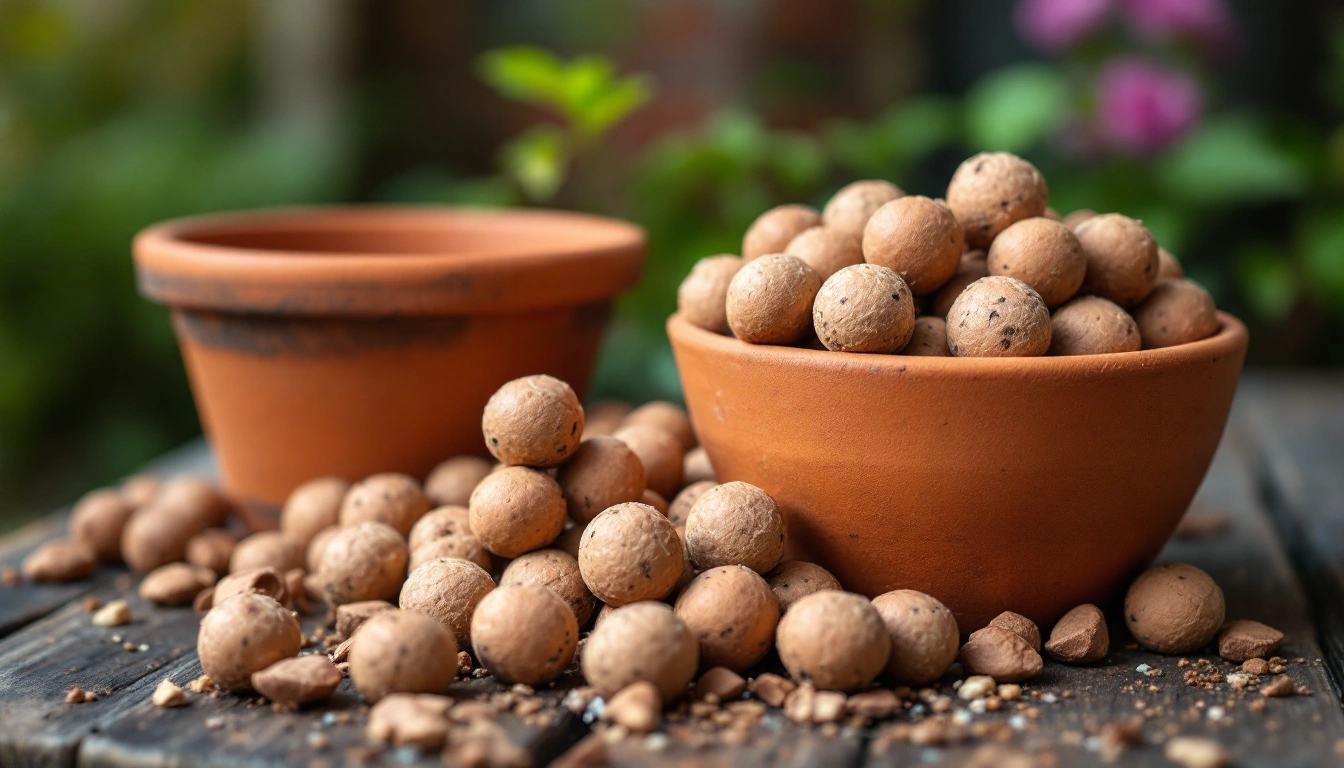
Leca stands for lightweight expanded clay aggregate. Each ball starts as raw clay that gets fired at high heat, which causes trapped moisture and gases to expand the clay from the inside, similar to popcorn popping. The result is a round or slightly irregular pebble with a hard, reddish-brown, somewhat porous outer shell and a honeycomb of tiny air pockets inside.
They're notably light for their size, especially compared to gravel or pumice of a similar diameter, and they float on water at first because of all that trapped air, though they gradually absorb water and sink as they saturate.
Sizing: what the different diameters are for
Leca balls typically come in a range of roughly 8 to 16 millimeters in diameter, sometimes sold as "small," "medium," or "large," though there's no universal standard across brands.
Smaller leca (around 8 to 10mm) packs more tightly, which gives finer roots more contact points. It suits smaller pots, delicate root systems, and situations where you want a bit more moisture retention between the smaller gaps.
Larger leca (around 14 to 16mm) creates bigger air gaps between pebbles, which improves airflow and oxygen delivery to roots. It's often preferred for larger plants, bigger containers, and species with thicker roots that can push between larger pebbles easily.
Many growers mix sizes in the same pot, using larger balls at the bottom for drainage and a finer layer near the root zone, though a single consistent size works fine for most houseplants too.
Reusability: leca's biggest advantage
Unlike organic potting mixes that break down over time, fired clay doesn't decompose. This makes leca one of the most reusable growing media available. A batch of leca balls can be used across multiple plants and multiple years, provided you clean and, ideally, sterilize them between uses.
Over a long period of heavy use, individual balls can crack, chip, or crumble slightly from repeated handling and root pressure, and any pebbles that break down into fine dust are worth removing since they no longer provide the same airflow benefit. But this is a slow, gradual process rather than a fixed shelf life.
Cleaning leca balls between plants
- Cleaning is straightforward and doesn't require special equipment:
- Remove all visible root fragments, old plant debris, and any mineral crust built up on the surface of the pebbles.
- Rinse thoroughly under running water, agitating the balls to knock loose dust and residue.
- Soak in plain water for several hours if there's stubborn buildup, then rinse again.
- For extra assurance between plants, especially if the previous plant had a pest or root disease, boil the leca for about 10 to 15 minutes or bake it in an oven to kill off lingering pathogens.
- Let the balls dry or cool before reusing, or use them wet if you're transitioning a plant straight into a new semi-hydro setup.
Cleaning leca before first use
- New leca balls straight out of the bag are usually covered in fine clay dust from manufacturing and shipping. Rinse them in a colander or strainer under running water until the runoff comes out mostly clear rather than cloudy. Many growers also soak new leca for 24 hours before potting a plant, which lets the pebbles fully saturate and gives you a chance to skim off any balls that float indefinitely, since persistent floaters sometimes indicate a manufacturing defect.
What to look for when buying leca balls
- When choosing a bag of leca, check for a fairly consistent size within the bag, since a huge range of sizes in one bag makes it harder to build an even layer. Look for pebbles that are mostly whole and round rather than a bag full of broken fragments and dust, since broken pieces contribute less to airflow and can clog the bottom of a net pot or container. A slightly rough, porous surface texture is normal and even useful, since it helps roots grip the pebbles.
Leca balls vs other inorganic media
- Leca balls are often compared to perlite or pumice, but they serve a different role. Perlite and pumice are typically mixed into soil to improve drainage and aeration within an organic mix. Leca balls are more often used on their own, as a complete growing medium in semi-hydroponic setups, or as a decorative top-dressing or drainage layer at the bottom of a pot. If you want to compare leca as a growing method against traditional soil, our leca guide covers the setup, watering, and nutrient side of that comparison in more depth. A bag of leca balls sized for your pot is a reasonable starting point if you're setting up your first semi-hydro container.
Using leca balls as a decorative top-dressing
- Beyond full semi-hydroponic setups, leca balls are also popular simply as a top-dressing over regular potting soil. A layer of leca on the surface covers the soil, reduces splash-back when watering, and can help slow surface evaporation slightly. Used this way, leca is purely functional and decorative rather than acting as the main growing medium, so cleaning requirements are lighter since the pebbles aren't sitting in constant contact with wet roots.
Using leca as a drainage layer
- Some growers add a layer of leca balls at the bottom of a pot, beneath regular potting soil, as a drainage layer. This use is debated among experienced growers, since a drainage layer can sometimes create a "perched water table" effect where water collects at the boundary between the two materials rather than draining away as intended. If you use leca this way, make sure the pot still has a functioning drainage hole, since a leca layer alone doesn't replace proper drainage out of the container.
Troubleshooting persistent floaters
- It's normal for leca balls to float for the first day or two after soaking, since the air trapped inside takes time to escape and be replaced by water. If a portion of your leca still floats after several days of full submersion, those particular pebbles may have an unusually dense, less porous structure, or a sealed outer shell that resists water absorption. This isn't usually a problem for growing, but if floaters keep pushing a plant loose in its container, you can weigh the top layer down with a few heavier stones or simply push the plant back into place as needed.
Frequently asked questions
- Leca balls themselves are a simple, durable, reusable product: fired clay pebbles that hold their shape and structure for years of use, provided you clean them properly between plants and choose a size that matches your pot and root system.
FAQ
Do leca balls need to be rinsed before first use?
Yes. New leca balls are dusty and should be rinsed thoroughly, and many growers also soak them for a day to let them fully saturate before potting a plant.
Can leca balls be reused for a new plant?
Yes, leca is one of the most reusable growing media available. Clean them well, and ideally sterilize by boiling or baking, before reusing for a different plant to avoid transferring pests or disease.
Do leca balls run out or wear down over time?
They last a very long time, often years, since fired clay doesn't decompose. Some balls can crack or crumble slightly with repeated handling, but this is gradual rather than a fixed expiration.
What size leca balls should I buy?
Smaller balls, roughly 8 to 10 millimeters, suit small pots and delicate roots. Larger balls, closer to 16 millimeters, are common for bigger plants and larger containers where more airflow around the roots is useful.