
Potting & Soil Mixes
Coco Coir Bricks: How They Work and How to Use Them
The short answer
Coco coir bricks are dehydrated, compressed blocks of coconut fiber that expand into a light, fluffy growing medium once soaked in water, offering a compact, long-shelf-life way to store and transport coir compared to pre-expanded bags.
Last updated September 2026
| What it is | Coconut husk fiber, dried and compressed into a dense brick |
|---|---|
| Expansion | Typically expands to several times its dry volume once fully hydrated |
| Hydration time | Usually 10–20 minutes soaking in water, longer for larger bricks |
| Storage | Dry bricks store compactly for a long time and take up far less space than loose coir |
| Before use | Rinsing is often recommended to reduce excess salts, especially for sensitive plants |
Scroll for more →
What's covered10
- What coco coir bricks actually are
- How to rehydrate a brick
- Should you rinse it first?
- Why bricks instead of pre-expanded bags
- Using expanded coir once it's ready
- Brick sizes and how much they make
- Working with multiple bricks at once
- Common issues when rehydrating
- Bricks vs. loose pre-expanded bags
- Storing unused coir
Your choice of coco coir bricks affects water and air around the roots. Compare coco coir bricks by drainage, water storage, and fit for the plant. Use this coco coir bricks guide to see the main trade-offs.
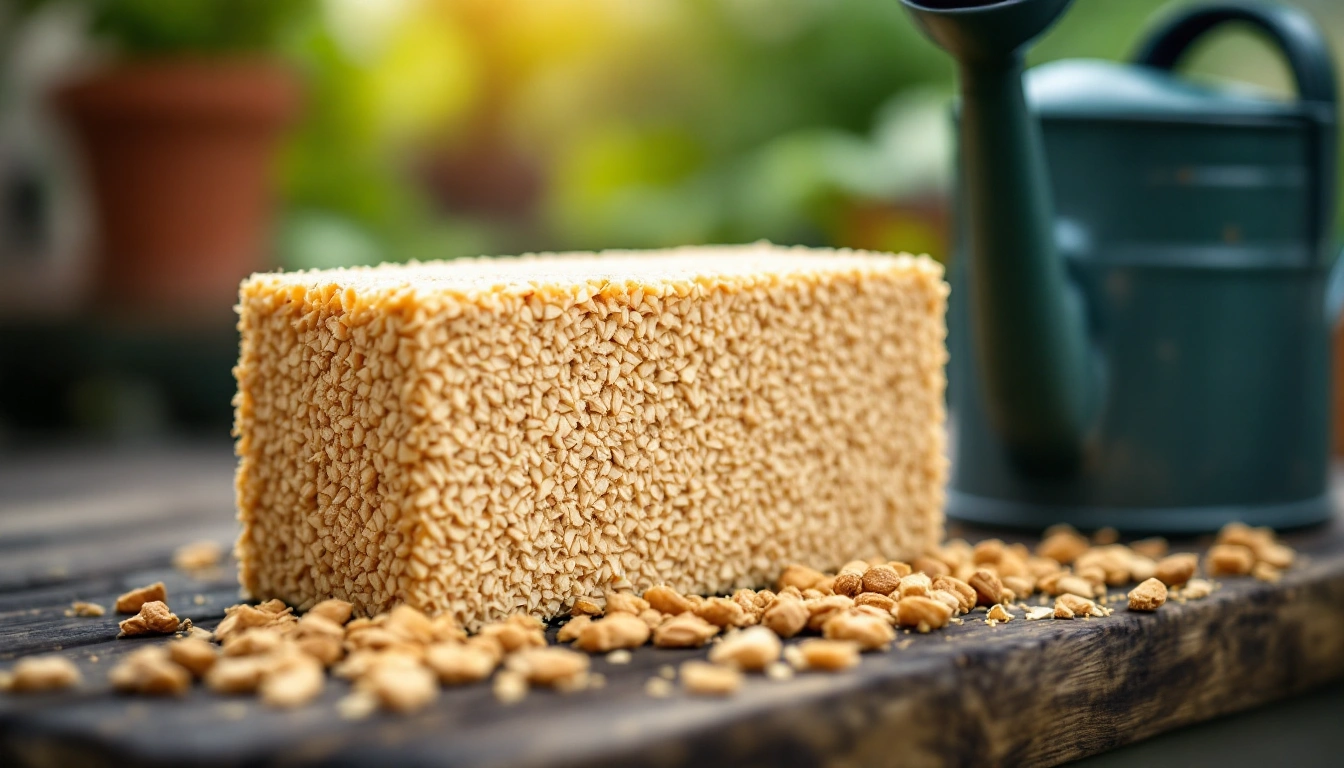
- Coco coir bricks are dehydrated, tightly compressed blocks of coconut husk fiber. They start out dense and hard, but expand to several times their dry volume once soaked in water, turning into a light, fluffy growing medium. Bricks exist mainly for storage and shipping efficiency - the same coir in loose, pre-expanded form would take up far more space and weight before it's ever used.
What coco coir bricks actually are
- Coco coir comes from the fibrous husk that surrounds a coconut shell. After the fiber is processed and dried, it can be compressed under pressure into dense bricks, discs, or blocks that hold their shape until water is added. This compression is purely physical - nothing is added to make the material expand - so hydrating a brick is really just the coir fiber reabsorbing the water it lost during processing and drying.
How to rehydrate a brick
- The general process is straightforward:
- Place the dry brick in a large container - a bucket or tub works well, since the coir expands significantly.
- Add water, generally warm rather than cold, since warm water absorbs into dry fiber a bit faster.
- Break the brick apart as it softens, working the water through evenly rather than letting one side sit dry while another gets soggy.
- Fluff the expanded material by hand or with a hand tool once it's fully loosened, to break up any remaining dense clumps.
- Most bricks fully expand within about 10 to 20 minutes, though larger bricks or blocks can take longer. A rough starting ratio is about 3 to 5 times the brick's dry volume in water, added gradually rather than all at once, so you can stop once the texture looks right rather than ending up with excess standing water.
Should you rinse it first?
Coco coir naturally contains some salts and, in some sources, elevated potassium and sodium levels absorbed from the coconut growing environment or processing water. Many growers rinse the expanded coir with clean water before using it, particularly for plants sensitive to salt buildup, since excess salts in the growing medium can interfere with a plant's ability to take up other nutrients.
For casual houseplant use, skipping the rinse usually isn't a serious problem, but it's a simple, low-cost step if you want to reduce any uncertainty, especially before using coir for seed starting or salt-sensitive species.
Why bricks instead of pre-expanded bags
The main advantage of bricks is storage and transport efficiency. A dry, compressed brick takes up a small fraction of the space and weight of the same material already expanded and bagged, which matters for shipping costs and for anyone storing growing medium for later use. The trade-off is the extra step of soaking and fluffing before you can actually pot anything, which pre-expanded bagged coir skips entirely.
a pack of coco coir bricks is a practical choice if you're stocking up for multiple repottings or want a compact, long-shelf-life supply on hand rather than buying pre-expanded bags each time.
Using expanded coir once it's ready
- Expanded coir can be used on its own for some purposes, like a base layer in hydroponic or semi-hydroponic setups, but it's more commonly blended with other materials - perlite, compost, or standard potting soil - to build a complete potting mix. Coir alone holds relatively few nutrients, so plants growing primarily in coir usually need a regular fertilizing routine to make up the difference.
Brick sizes and how much they make
- Coco coir bricks come in a range of sizes, from small blocks meant for a single pot to large bricks intended for bigger gardening or hydroponic projects. Because the material is so tightly compressed, even a modest-looking brick can expand into a surprisingly large volume of usable coir - often several times the dry brick's own size. It's worth checking a product's stated expanded volume rather than judging by the size of the dry brick alone, since a small, dense block can go much further than it appears.
Working with multiple bricks at once
- For larger projects - filling several containers, starting many seed trays, or setting up a bigger semi-hydroponic system - it's often more practical to rehydrate bricks in batches rather than trying to expand a large volume all at once in a single container. Rehydrating two or three smaller bricks separately, then combining the expanded coir, is generally easier to manage than working with one oversized mass of coir that's difficult to break apart evenly. It also makes it simpler to rinse each batch if you're removing excess salts before use, since a smaller volume rinses more evenly than a very large one.
Common issues when rehydrating
Uneven expansion. If water isn't worked through the brick evenly, parts can remain dry and compressed while other areas turn to mush. Breaking the brick into smaller chunks before adding water, rather than pouring water over a whole intact block, generally produces a more even result.
Using too little water. A brick that hasn't received enough water will only partially expand, leaving dense, unusable clumps mixed in with properly expanded coir. Adding water gradually and checking the texture, rather than guessing at the total amount needed upfront, avoids this.
Skipping the fluffing step. Even fully hydrated coir can hold together in dense clumps until it's actively fluffed and broken apart by hand. Skipping this step can leave a mix that looks expanded but still behaves more like a dense mass than the light, airy medium coir is supposed to provide.
Bricks vs. loose pre-expanded bags
- Choosing between a compressed brick and a bag of already-expanded coir mostly comes down to how you plan to store and use it. Bricks are the better choice for stocking up in advance, shipping, or storing in limited space, since the dry, compressed form takes up so little room. Pre-expanded bags are the better choice when you want to start planting immediately without any prep time, or when you're only doing a single small repot and don't want to deal with soaking and fluffing a brick for just one pot's worth of coir.
Storing unused coir
- Dry, unexpanded bricks store almost indefinitely if kept dry, since there's no organic breakdown happening while the material is dehydrated and compressed. Once expanded, coir behaves like any other organic growing medium - it's best used within a reasonable timeframe rather than stored wet for extended periods, since moist organic material is more prone to mold or fungal growth over time.
FAQ
How do I rehydrate a coco coir brick?
Place the brick in a large container and add warm water, then break it apart as it absorbs water and expands. Most bricks fully expand within 10 to 20 minutes, though larger bricks can take longer. Fluff the expanded coir with your hands or a tool once it's loose.
How much water does a coco coir brick need?
It varies by brick size, but a common rule of thumb is roughly 3 to 5 times the brick's dry volume in water. Adding water gradually and checking the texture as you go avoids ending up with a soggy, oversaturated result.
Do I need to rinse coco coir bricks before using them?
Many growers rinse coir after expanding it to flush out excess natural salts, particularly for salt-sensitive plants. It's not always strictly necessary for casual houseplant use, but it's a low-effort step that removes any doubt.
Can I reuse expanded coco coir?
Yes, within reason. Coir holds up over multiple growing cycles better than peat does, though it does break down and lose structure eventually, the same as any organic growing medium. Mixing spent coir with fresh material or compost is a common way to extend its usefulness.