
Self-Watering Planters
Self-Watering Device for Plants: The Main Types and How to Pick
The short answer
A self-watering device is any add-on or built-in system - a wick, a ceramic or plastic watering spike, a capillary mat, or a reservoir insert - that feeds water into soil gradually, so a plant can go longer between hands-on waterings.
Last updated September 2026
| Wick systems | A cord or strip of absorbent material carries water from a reservoir into the soil by capillary action |
|---|---|
| Watering spikes/globes | A bulb or spike inserted into the soil releases water slowly as the soil dries, refilled by hand or bottle |
| Capillary mats | An absorbent mat sits under multiple pots, wicking water up into each one from a shared water source |
| Reservoir inserts | A container-within-a-container design where a lower chamber holds water and feeds an upper soil chamber |
| Best for | Plants that want even, consistent moisture; not a fit for succulents or cacti that need to dry out between waterings |
Scroll for more →
What's covered11
- The four main types
- Matching the device to the plant
- Sizing and refill rhythm
- When to skip a device and just repot into a self-watering planter instead
- Choose by the job, not the shape
- How to test a wick before trusting it
- Setting up a watering spike or globe
- Using a capillary mat with several pots
- Preparing for a trip
- Cleaning and storage
- Common problems and the first check
Your choice of self watering device for plants affects water and air around the roots. Compare self watering device for plants by drainage, water storage, and fit for the plant. Use this self watering device for plants guide to see the main trade-offs.
- If you don't want to buy a whole new self-watering planter, a self-watering device does the same basic job as an add-on: it feeds water into soil gradually so the plant can go longer between hands-on waterings. There are four common types, and they're not interchangeable.
The four main types
Wick systems. A cord or strip of absorbent material (often nylon or cotton) runs from a water reservoir into the soil. Water climbs the wick by capillary action and spreads into the surrounding soil. This is the same principle used in many DIY and commercial self-watering planters.
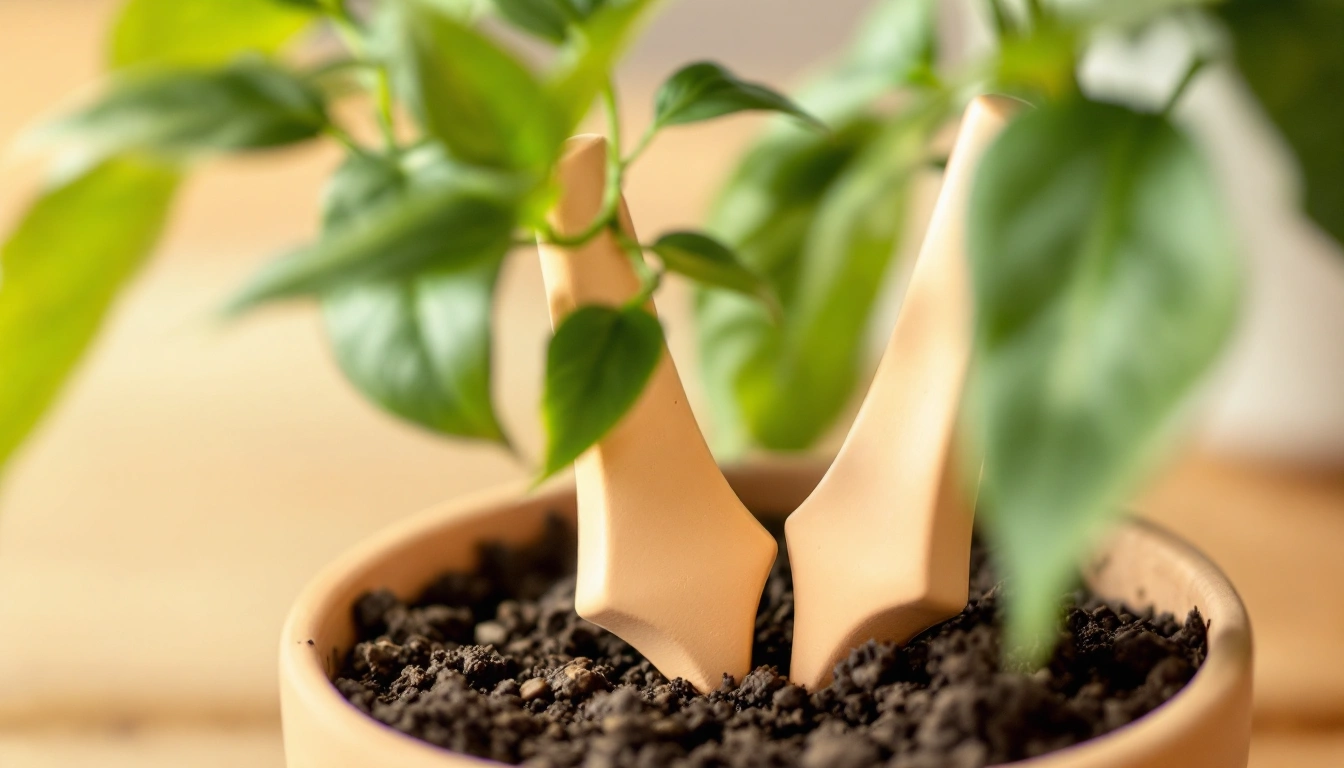
Watering spikes and globes. A ceramic spike or a glass/plastic globe is filled with water and inserted into the soil. Water seeps out slowly through the porous material or a narrow neck as the soil dries. These are the most common retrofit option because they need no reservoir plumbing - you just refill the spike or globe itself.
Capillary mats. An absorbent mat sits under several pots at once, usually on a tray, wicking water up into each pot from one shared water source. This suits people managing a row of plants rather than one pot.
- Reservoir inserts. Some devices are a container-within-a-container: a lower water chamber feeds an upper soil chamber through a wick or riser, similar in concept to a purpose-built self-watering planter but sold as a separate insert you place inside an existing pot.
Matching the device to the plant
The device only helps if it matches what the plant actually wants. Most common houseplants - pothos, peace lily, ferns, many tropicals - want soil that stays lightly, evenly moist, which is exactly what these devices are built to deliver.
Succulents and cacti are the exception. They want the soil to dry out fully between waterings, so a device that keeps soil constantly damp works against the plant's needs. If you like the convenience for a succulent anyway, let the device run dry for long stretches rather than keeping it topped up.
A ceramic watering spike or wick kit is usually the simplest way to try this out on a plant you already have, before committing to a full self-watering planter.
Sizing and refill rhythm
- Bigger devices hold more water and need refilling less often, but there's no universal number - a small spike under a large, actively growing plant in bright light might empty in two or three days, while a bigger reservoir under a slow-growing plant in low light could last a few weeks. Check the device by sight for the first couple of weeks to learn its actual rhythm for your specific plant and light conditions, rather than guessing from a generic schedule.
When to skip a device and just repot into a self-watering planter instead
- If you're setting up several plants that all want even moisture, or you're already planning to repot, a dedicated self-watering planter with a built-in reservoir is usually less fiddly long-term than retrofitting a device into a pot that wasn't designed for one. Devices are best for a single plant in a pot you don't want to replace, or for testing whether self-watering suits your routine before you commit to new pots.
Choose by the job, not the shape
- Pick a wick when you can place a jar or tank beside or below the pot. A wick is easy to see, trim, and replace. It also lets you change the water capacity without changing the pot. The trade-off is a visible cord and a separate water container that needs a stable place.
- Pick a spike or globe when the pot already has open soil near the edge. These devices take little setup and move easily between pots. Their small water capacity suits short gaps between normal watering rather than a long absence.
- Pick a capillary mat for several nursery pots with open drain holes. The mat must touch the base of each pot. Decorative cachepots, raised feet, and blocked holes can break that contact and stop water from moving upward.
- Pick an insert when you want a hidden tank inside a decorative outer pot. Check the inner pot's height and width first. The insert must leave enough room for roots, soil, and an air gap above the water.
How to test a wick before trusting it
- Wet the full wick first. Put one end in water and press the other end into damp potting mix. A bone-dry wick may not start moving water at once, especially if the soil around it is also dry.
- Mark the water level on the tank. Check it again the next day. A small drop shows that water is moving, though some loss can also come from open-air evaporation.
- Check the mix near the wick and near the far side of the pot. One wet pocket beside the cord is not enough for a wide root ball. A larger pot may need more than one wick placed across the base.
- Watch the plant during the first week. Wilting with a full tank can mean poor wick contact. Yellowing, soft growth, or soil that never begins to dry can mean the device is feeding faster than the plant uses water.
Setting up a watering spike or globe
- Water the pot normally before inserting the device. Dry soil can pull water from a small globe too quickly and empty it before the flow settles.
- Make a pilot hole with a pencil or narrow tool. Pushing a fragile ceramic or glass part into hard soil can crack the device or pack soil into its opening.
- Place the spike away from the main stem. Aim for the active root zone near the middle or outer part of the pot without forcing the point through a large root.
- After filling, check for a blocked outlet. A globe that stays completely full while the plant wilts may have soil packed into its neck. Remove it, rinse the opening, and try again in a fresh pilot hole.
Using a capillary mat with several pots
- Start with clean pots that have clear drain holes. The mat can only feed water through an opening that touches it. A saucer between the pot and mat will stop direct contact unless the saucer is part of the intended system.
- Wet the mat before arranging the pots. Press each pot down gently so its base sits flat. A warped nursery pot may need a different position to make steady contact.
- Group plants with similar water needs. A fern and a cactus should not share one always-wet mat. Put dry-loving plants elsewhere and use the shared mat for plants that accept the same moisture pattern.
- Keep the mat and tray clean. Loose soil, dead leaves, and algae can collect on a wet surface. Rinse the mat as its care instructions allow and clear the tray before returning the pots.
Preparing for a trip
- Test the device while you are still home. Run it for at least several normal watering cycles so you know how fast the water drops and whether the soil stays in a safe range.
- Fill the device near departure, but do not flood the pot as extra insurance. A larger dose of water does not make a small tank last longer if the excess simply fills the root zone.
- Move a plant out of harsh direct sun only if that plant already tolerates the lower-light spot. Lower heat can slow water use, but a sudden move into unsuitable light creates a different stress.
- Ask a helper to check the tank rather than water on a fixed schedule. A clear note showing the fill point and maximum level is more useful than a general request to "water the plants."
Cleaning and storage
- Empty and rinse a tank when water smells stale or a film appears. Use a narrow brush for a spike or fill tube if the maker's instructions allow it. Rinse away all cleaner before returning the device to the pot.
- Inspect cotton or natural-fiber wicks for soft spots and fraying. Replace a worn wick instead of tying weak sections together. Synthetic cord may last longer, but it still needs good contact with the water and soil.
- Store glass globes where they cannot roll or knock together. Let ceramic spikes dry before storage. Fold a clean capillary mat loosely rather than leaving wet soil pressed into it.
Common problems and the first check
- The tank empties in one day. Check for a loose cap, a cracked globe, very dry soil, or an outlet that is too open. Refill only after fixing the cause.
- The tank never drops. Wet the wick, clear the spike opening, or restore contact between the mat and pot. Then check the soil by hand rather than assuming the plant is being watered.
- Only one side of the pot is damp. Move the wick or add a second one so water reaches more of the root ball. Do not solve uneven contact by keeping the wet side flooded.
- The soil smells sour. Stop filling the device, drain any standing water, and let the mix begin to dry. Check that the pot has a clear drain route before using the device again.
- Roots grow into the tank. Trim only dead or damaged roots during a proper repot. For healthy roots, lift the inner pot carefully and decide whether a larger planter or a different insert gives the plant more space.
FAQ
Do self-watering devices work for all plants?
No. They suit plants that want consistent, even moisture, which covers most common houseplants. Succulents and cacti want the soil to dry out between waterings, so a device that keeps soil constantly moist works against them unless you deliberately let it run dry for long stretches.
How often do I need to refill a self-watering device?
It depends on the device's water capacity, the plant's size, and light and temperature conditions. Small spikes or globes might need refilling every few days; larger reservoir systems can go a few weeks. Check by sight or by lifting the pot until you learn your specific setup's rhythm.
Can I add a self-watering device to a pot I already have?
Yes - wick systems, watering spikes and globes are all designed to retrofit into an existing pot, unlike a built-in reservoir planter, which requires the pot itself to have the reservoir chamber.
Are ceramic watering spikes better than plastic ones?
Both work the same way: porous material lets water seep out slowly into the soil. Ceramic spikes are typically more breakable but don't degrade from UV or water exposure the way some plastics can over years of use. Either works for the same basic job.